A dedicated IP address is an address used exclusively by one customer’s server or website, while a shared IP is split across several websites on the same server.
Most websites in Uganda do not need a dedicated IP address. A shared IP works just fine for business websites, blogs, and online shops.
You only need a dedicated IP when a specific service or third party requires a fixed address, such as a partner’s firewall, a VPN, or a mail server you manage.
Also, a dedicated IP does not improve SEO rankings, website speed, or security by itself.
Let’s find out when you need one, how to check your hosting setup, and what Truehost VPS plans offer.
When Do You Need a Dedicated IP Address?
Your need for a dedicated IP depends on the services running on your server and the requirements of the systems connecting to it. The table below covers common situations and if a dedicated IP address is necessary.
| Your situation | Dedicated IP needed? |
|---|---|
| HTTPS for your domain | No, SNI supports shared IPs |
| Google rankings | No |
| Website speed | No, server resources are Important |
| Partner firewall allowlisting | Yes, if required |
| Sending email from your own server | Not always, but useful for reputation control |
| Hosting a VPN or custom DNS | Usually |
| Very old devices without SNI support | Possibly |
| Previewing a website before DNS changes | No |
If you run a standard website without any of these technical requirements, your existing shared IP should be sufficient. However, if a business partner, application, or server configuration requires a fixed address, a dedicated IP may be necessary.
Benefits of a Dedicated IP Address
A dedicated IP address gives you exclusive use of an IP address rather than sharing it with other websites.
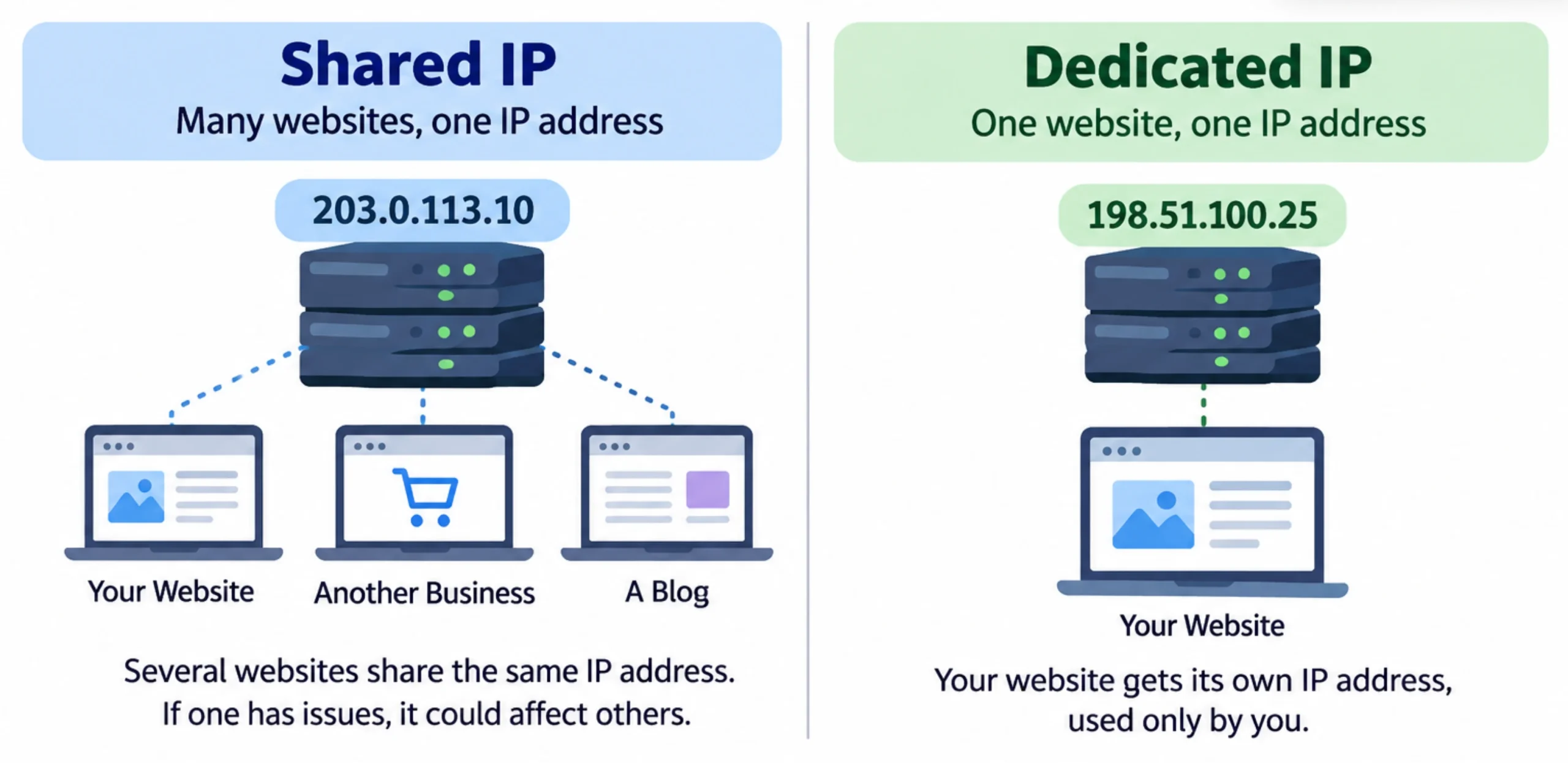
This offers several advantages, particularly when running services that depend on stable network access.
1) Better Control Over Email Reputation
When you send emails through a shared IP address, your email reputation can be affected by the activities of other senders using the same address.
For example, if another customer sends spam or engages in suspicious email activities, email providers may flag the shared IP. This can affect the delivery of messages from other customers using it.
A dedicated IP gives you greater control over your sending reputation because other customers’ email activities no longer affect the address.
However, you still need to configure your mail server correctly, follow email-sending guidelines, and maintain a good sending history. New dedicated IP addresses also require gradual warm-up before handling large email volumes.
For this reason, a dedicated IP is more useful for businesses sending large volumes of email than for websites sending occasional notifications.
2) Independent Website Reputation
Websites sharing an IP address also share some of its network reputation.
If another website on the same IP sends spam or becomes compromised, the address could end up on an IP blocklist. This may affect other websites using it, particularly when external services check IP reputation.
A dedicated IP reduces this exposure because your website no longer shares its address with other customers.
However, your website can still be blacklisted if it distributes spam, hosts malware, or engages in suspicious activities. Having an exclusive IP does not remove the need for proper website security.
It is also worth noting that IP reputation is different from search engine rankings. Google does not give websites a ranking advantage simply because they use dedicated IP addresses.
3) A Fixed Address for Allowlisting
Some business systems only accept connections from approved IP addresses.
For example, a company may restrict access to its database or API to servers whose IP addresses have been added to its firewall allowlist.
A dedicated IP gives you a fixed address that the system administrator can approve. Once added, your server can connect without requiring repeated approval, provided the address remains unchanged.
This is very useful for businesses connecting their applications to third-party platforms, financial systems, and corporate networks.
4) Website Accessibility via IP Address
On shared hosting, several websites use the same IP address. The server uses domain names to determine which website to display when someone visits.
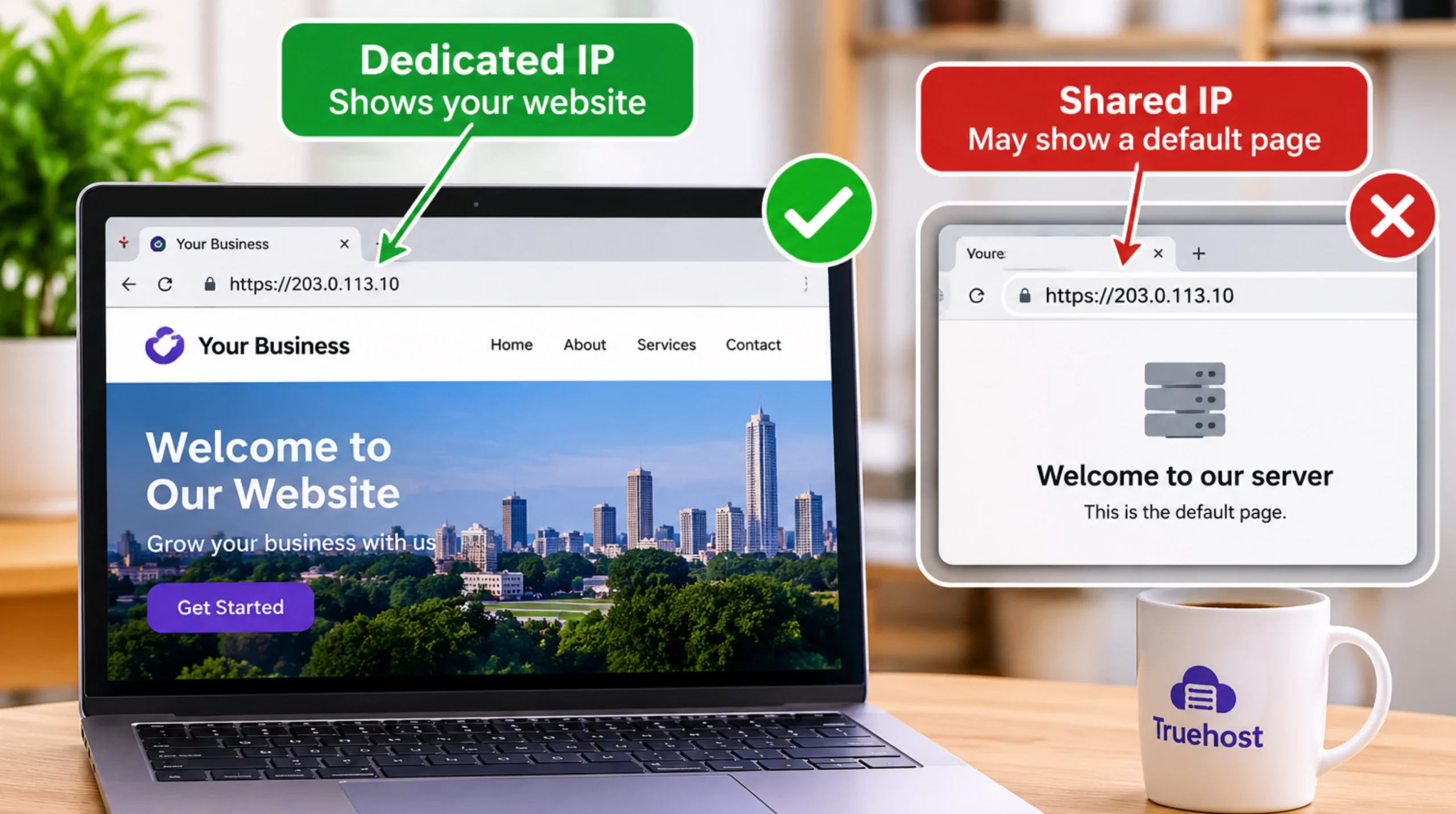
If you enter the shared IP address directly into a browser, the server may display its default page rather than your website.
A dedicated IP allows you to configure what visitors see when they access your server through its IP address.
This can be useful for certain server configurations, monitoring tools, and applications that connect directly through an IP address. However, it does not provide an SEO advantage.
5) Support for IP-Based Access Controls
A dedicated IP gives you a stable address that can be used when setting up network access restrictions.
For example, you can configure a firewall to accept connections from approved IP addresses while blocking requests from unknown sources.
This is useful when running business applications, private databases, or services that should only be accessible to specific networks.
Keep in mind that IP-based restrictions are only one part of network security. You should still use SSL certificates, strong passwords, regular software updates, and appropriate authentication.
6) Compatibility With Older Devices
Some older browsers and operating systems do not support Server Name Indication (SNI), a technology that allows several websites to use different SSL certificates on the same IP address.
When an older browser without SNI support requests a website hosted on a shared IP, the server may return its default SSL certificate instead of the certificate assigned to that website. This can cause certificate mismatch warnings.
A dedicated IP can help avoid this compatibility issue by allowing the server to use a separate address for your website.
However, modern browsers and operating systems support SNI, so most websites do not need a dedicated IP for HTTPS compatibility. Check your website analytics before paying for one to accommodate older visitors.
Uses of a Dedicated IP Address
A dedicated IP is useful for applications and services that need a stable, exclusive network address. While a regular business website can run on shared hosting, some business and technical setups have additional requirements.
These are the eight common uses.
1) Sending Emails From a Self-Managed Mail Server
If you manage your own mail server, a dedicated IP gives you greater control over its sending reputation and DNS configuration.
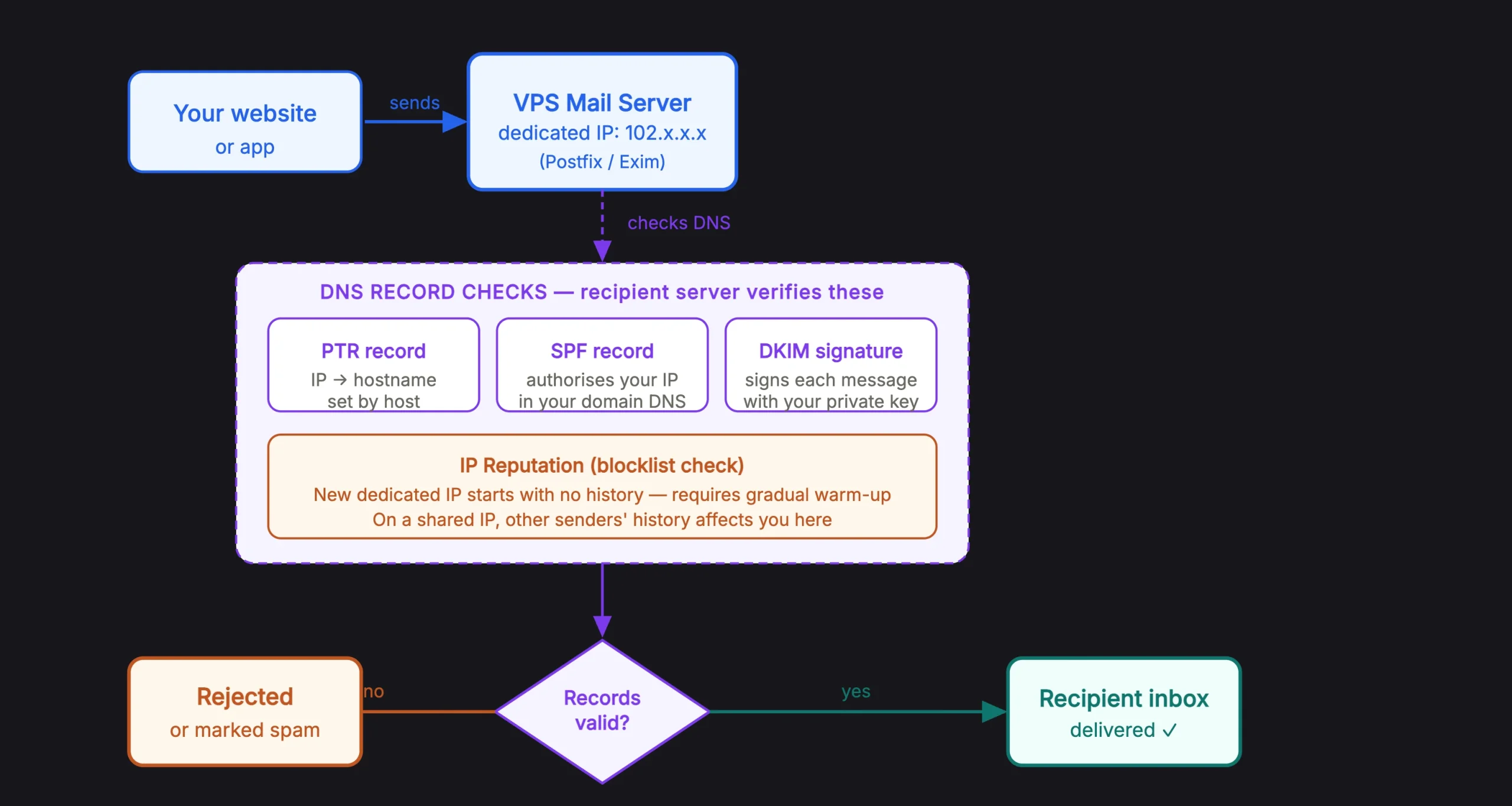
You can configure important email authentication and routing records, including:
- PTR (reverse DNS): Connects your server’s IP address to its hostname.
- SPF: Identifies the servers authorized to send emails on behalf of your domain.
- DKIM: Adds a digital signature to outgoing emails to help receiving servers verify their authenticity.
A dedicated IP also allows you to build and maintain your own sending reputation without sharing it with other customers.
However, check that your hosting provider supports reverse DNS management before setting up the mail server. Proper configuration is important for reliable email delivery.
2) Hosting a VPN
A Virtual Private Network (VPN) allows users to establish encrypted connections to a private network over the internet.
If you want to run your own VPN server using software such as WireGuard or OpenVPN, a dedicated IP provides a consistent address for connecting devices.
For example, employees can connect to the company’s VPN using the same server address when accessing internal resources remotely.
Running a VPN requires server-level access to install and configure the necessary software. This means you’ll need a VPS rather than ordinary shared hosting.
3) Connecting to Third-Party Services That Require IP Allowlisting
Some third-party services restrict access to approved IP addresses.
This is common with APIs, databases, financial platforms, and business applications that use firewall rules to control incoming connections.
If a service provider requires your server’s IP address, you can supply your dedicated IP for allowlisting.
For example, a business integrating its application with an external database may need the database administrator to approve its server address before allowing connections.
Confirm this requirement with the service provider before purchasing a dedicated IP. Some services use API keys, tokens, or other authentication methods instead.
4) Online Stores and Payment Gateways
Most online stores can operate on shared hosting without a dedicated IP address.
However, certain payment gateway integrations may require a fixed server IP for specific API operations, including payouts and refunds.
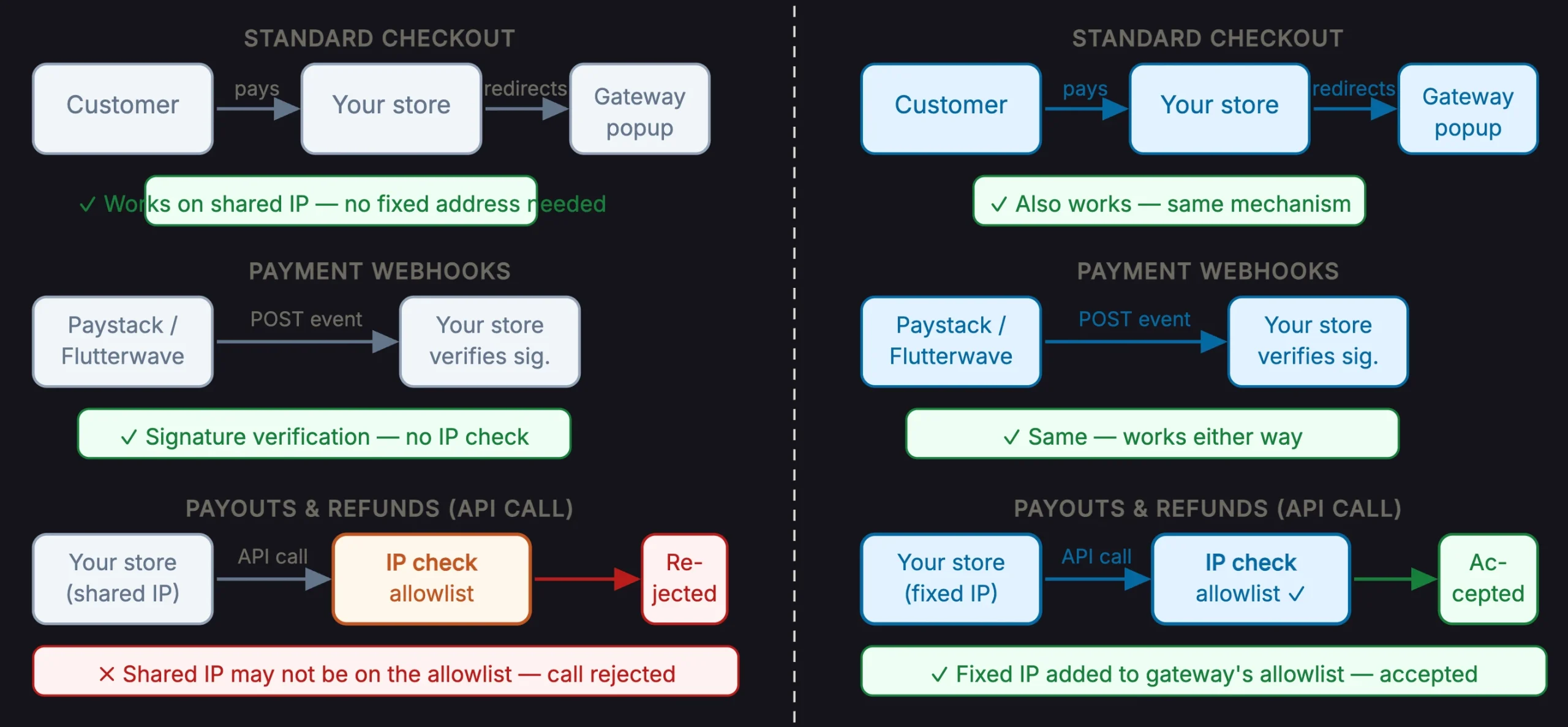
For example, payment providers such as Paystack and Flutterwave may have IP allowlisting requirements for particular integrations.
A VPS with a dedicated IP provides a consistent address that can be approved by the payment provider.
Receiving payment notifications through webhooks does not necessarily require a dedicated IP. You can use webhook signature verification to confirm that incoming notifications are genuine.
Always check the documentation for your particular payment integration before making changes to your hosting plan.
5) SaaS Platforms
Software-as-a-Service (SaaS) platforms allow customers to access software applications over the internet without installing and maintaining the software on their own computers.
If you operate a SaaS platform, some business customers may require your application’s server IP address to be added to their firewall allowlists.
A dedicated IP gives these customers a consistent address to approve when connecting their internal systems to your platform.
For example, a company using your SaaS application may only permit API connections from approved external addresses.
The platform itself does not automatically require a dedicated IP. You only need one if your customers or connected services have specific network requirements.
6) ERP Systems, CRM Applications, and Corporate Portals
Enterprise Resource Planning (ERP) systems, Customer Relationship Management (CRM) applications, and corporate portals often connect several business departments and external services.
Some of these applications need controlled access to databases, financial systems, and internal networks.
A dedicated IP can support configurations such as:
- Connecting to banking integrations that require a static IP address.
- Restricting access to business applications through firewall allowlists.
- Allowing connections only from approved office networks or VPN servers.
- Providing a consistent address for external systems connecting to company applications.
These applications generally require a VPS or dedicated server because of their software installation, resource, and configuration requirements.
7) Running Custom DNS
If you manage your own nameservers, you may need dedicated IP addresses for their DNS glue records.
For example, you could create custom nameservers such as ns1.yourdomain.com and ns2.yourdomain.com.
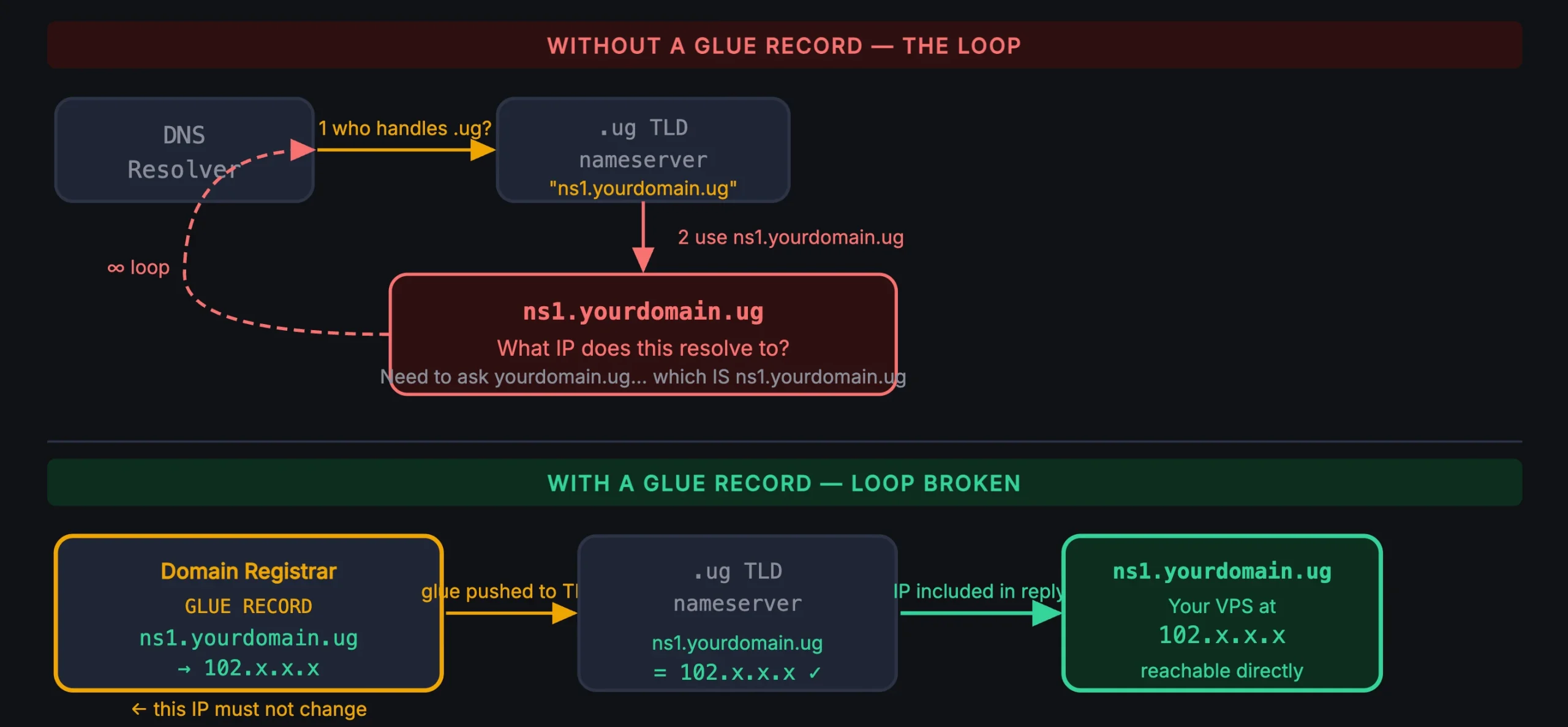
Because these nameservers belong to the same domain they help resolve, their IP addresses must be registered with your domain registrar. These registrations are known as glue records.
Static IP addresses help keep the nameserver configuration consistent.
However, you do not need to manage custom DNS infrastructure for an ordinary website. If you use your hosting provider’s nameservers, you can continue with that setup without purchasing a dedicated IP for this purpose.
8) Running Services on a VPS or Dedicated Server
A VPS or dedicated server gives you more control over the software and services you can install and run.
Apart from hosting websites, you can use these environments for:
- Mail servers and email applications.
- Databases and database management systems.
- VPN servers.
- Online game servers.
- Development and testing environments.
- Business applications and internal tools.
These services may need a dedicated IP so users, applications, and external systems can connect through a consistent address.
Our Truehost VPS plans include a dedicated IP address, making them suitable for hosting applications that require one.
Remember that a dedicated IP is not the same as a dedicated server. It only provides an exclusive network address; it does not give you additional CPU, RAM, storage, or application performance.
Does a Dedicated IP Improve SEO, Performance, or Security?
No. Google does not give websites better rankings for using dedicated IP addresses.
In an Ask Googlebot video from 2021, Google’s John Mueller confirmed that shared hosting does not hurt a site in Search, and that Google treats each site on its own merits regardless of which other sites share the same IP.
So, you do not need a dedicated IP for SEO purposes.
Website speed depends on server resources like CPU, RAM, storage, and server configuration.
A poorly configured or overloaded server will slow down a website regardless of if it uses a shared or dedicated IP. Check your hosting resources before paying for an additional address.
A dedicated IP does not automatically protect your website either. What it does is make IP-based access controls possible by restricting a service to approved addresses or configuring a firewall to accept connections from specific partners.
Those are real use cases, but they are not the same as general security. You still need SSL certificates, strong passwords, software updates, and firewall protection.
Do You Need a Dedicated IP for SSL Certificates?
No. Server Name Indication (SNI) allows multiple websites to use HTTPS certificates on the same IP address, so you do not need a dedicated IP to run HTTPS on your domain.
The exception involves older browsers and operating systems that do not support SNI, Internet Explorer on Windows XP, for example, or Android 2.3 and earlier.
Check your website analytics before considering a dedicated IP for compatibility reasons.
One more thing, Let’s Encrypt made certificates for raw IP addresses available from January 2026. These certificates last only about six days and work with a limited set of validation methods. Most websites should continue using standard domain-based SSL certificates.
Getting a Dedicated IP With Truehost VPS Hosting
If you run a standard business website, blog, or online shop and none of the situations discussed above apply, you can continue using shared hosting.
However, if you manage your own mail server, VPN, business application, or an integration that requires a fixed IP address, a dedicated IP may be a better fit.
Before ordering, confirm the requirements with your service provider or business partner. This helps you avoid paying for an additional address that your application does not need.
Our Truehost VPS Hosting plans include a dedicated IP address, giving you a consistent address for hosting websites, applications, and other server-based services.
You can choose between managed and unmanaged VPS hosting depending on how much server administration you want to handle. We also offer an additional IP address as an add-on if your setup requires more than one.
Check our available plans and billing options to find a suitable VPS for your applications.
