Content marketing means creating and sharing useful content. You use it to attract, educate, and convert customers.
For a Ugandan business owner, it is a practical way to build an online presence. It builds trust. It improves visibility. It generates leads and supports long-term growth.
A strong content marketing strategy turns that effort into clear decisions. It shows you who to reach, what to publish, where to share it, and how to measure results.
Most businesses skip this step. The Content Marketing Institute’s 2025 B2B research found that only 37% of marketers had a documented strategy. Another 38% had one that was not written down. Among successful organizations, 62% had it on paper.
This guide walks you through:
- Audience research and goals
- Topic selection and content types
- Distribution channels and SEO
- Measurement and continuous improvement
One thing comes first. A website, a domain, and a professional email address are the foundation of your owned online presence. Social platforms can change their rules. Your website stays yours.
Registering a .ug domain is open to everyone, so you can start today.
1) Know Your Target Audience
Start with the people you want to serve. Vague audiences lead to vague content.
Identify your ideal customer. Write down:
- Location
- Age
- Needs and problems
- Goals
- Buying behavior
Then check how they get online. The Uganda Communications Commission (UCC) reported 44.3 million active mobile subscriptions by mid-2025. Only 17.6 million smartphones were in use.
Smartphones are still fewer than subscriptions. Keep your pages light and mobile-friendly.
Create simple buyer personas. One persona per customer group is enough. Give each a name, a main problem, and a goal.
Research customer questions. Look at:
- Google searches and suggestions
- Social media comments and groups
- Customer reviews
- Conversations with customers
- Competitor content
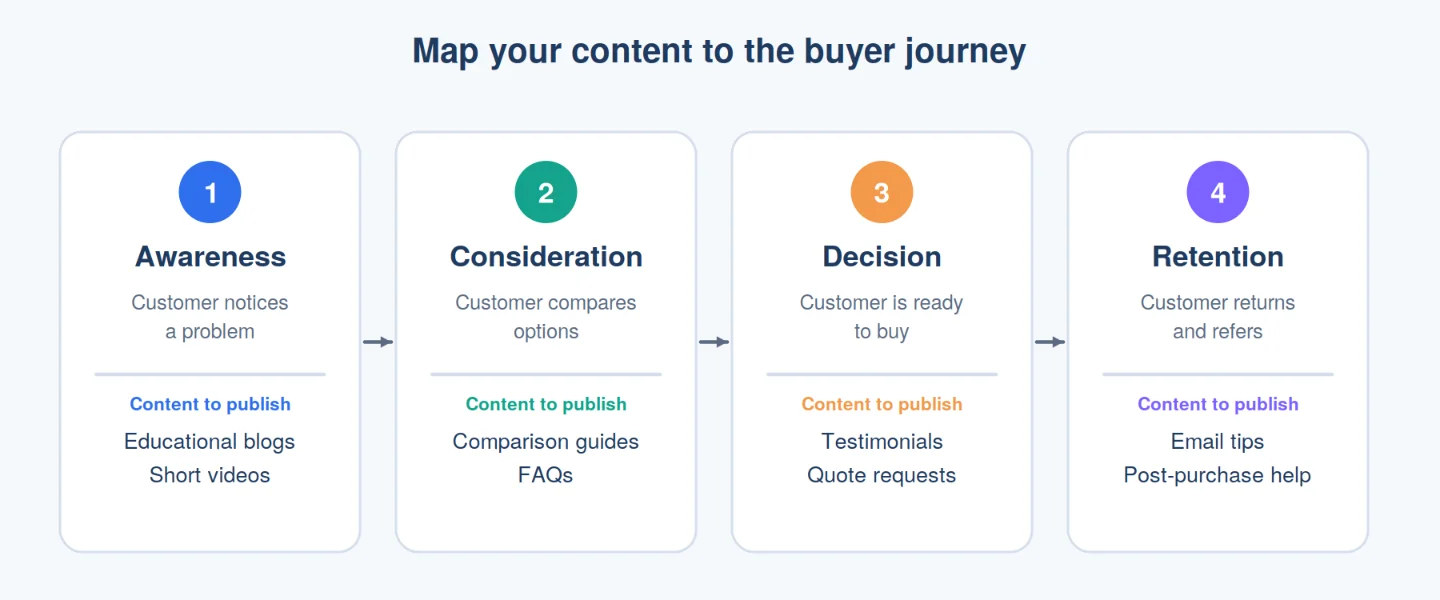
Map content to the buyer journey. Each stage needs different content:
- Awareness: the customer notices a problem.
- Consideration: the customer compares options.
- Decision: the customer is ready to buy.
- Retention: you keep the customer happy and returning.
Example: A Kampala fashion boutique may create content for customers searching for affordable outfits, delivery options, styling advice, and trusted local sellers.
Now you know who you are talking to. Next, decide what you want that audience to do.
2) Set Content Marketing Goals
Goals keep your content focused. Without them, you publish and hope.
Choose one clear business goal:
- Brand awareness
- Website traffic
- Leads
- Sales
- Customer loyalty
- Local visibility
Set measurable targets. Aim to increase website visitors, email subscribers, inquiries, bookings, or sales. Put a number and a date on each target.
Align goals with the customer journey. Awareness content should bring visitors. Decision content should bring inquiries and sales.
Choose your KPIs:
- Traffic
- Engagement
- Email signups
- Leads
- Conversions
- Revenue
Focus on business outcomes, not only likes, views, or followers. Followers do not pay your rent.
Measurement is where many teams struggle. CMI’s 2025 data shows that only 51% of B2B marketers can prove content increased sales. Just 25% can show it lowered the cost of winning a customer.
With goals set, you can pick topics that serve them.
3) Choose Your Core Topics
Topics give your content marketing strategy a shape. Pick a few and go deep.
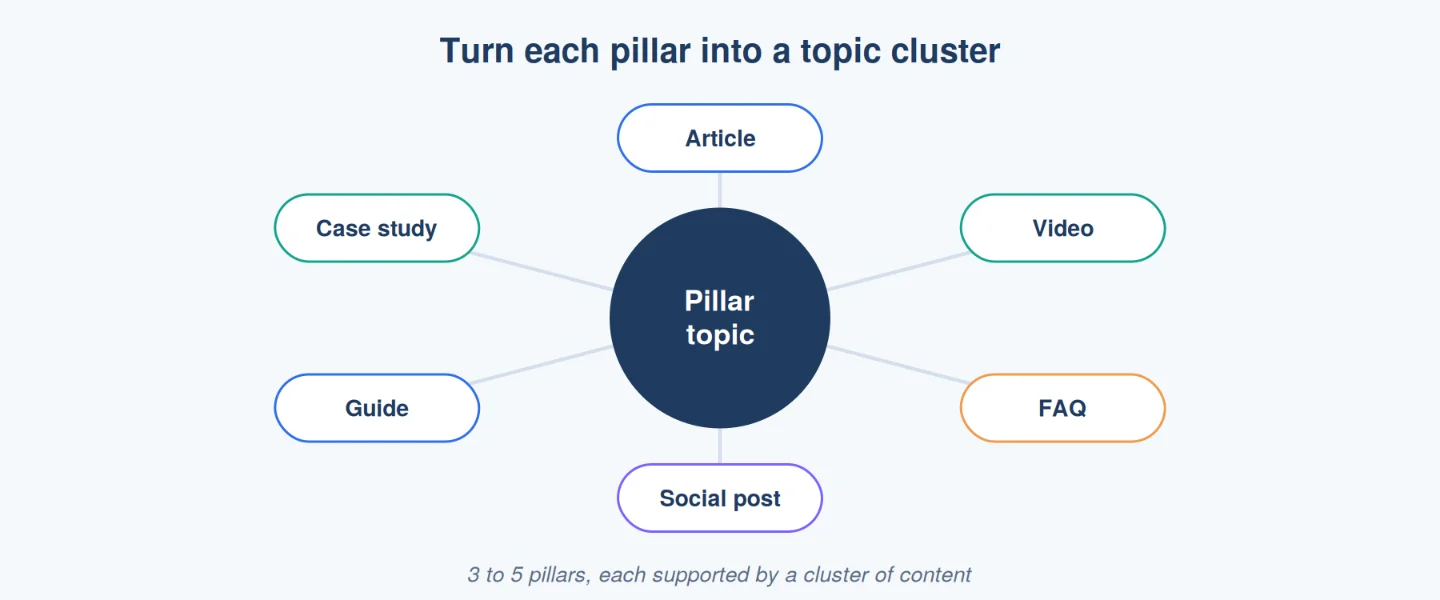
Select 3–5 content pillars. Each pillar should connect to your products, your services, and your customers’ needs.
Turn each pillar into specific topics. One pillar can produce:
- Articles
- Videos
- Social media posts
Research keywords and questions. Search for the words your audience types into Google. Note the questions they ask.
Prioritize your topics. Score each idea on four points:
- Audience demand
- Business value
- Competition
- Your expertise
Build topic clusters. Group related content around your main services or customer problems. One strong guide can link to several smaller articles.
The risk is spreading too thin. Five pillars you cover well beat fifteen you cover badly.
Next, match each topic to the right format.
4) Choose the Right Content Types
Each format does a different job. Choose based on your goal and your capacity.
- Blogs: Best for SEO, education, FAQs, and thought leadership.
- Videos: Best for tutorials, product demonstrations, testimonials, and brand storytelling.
- Social media content: Best for awareness, engagement, and community building.
- Email newsletters: Best for nurturing leads and retaining customers.
- Infographics: Best for simplifying data, processes, and comparisons.
- Podcasts: Best for interviews, storytelling, and building authority.
- Interactive content: Best for engagement and lead generation through quizzes, calculators, and assessments.
- Case studies: Best for proving results and building customer trust.
Video deserves a closer look. Wyzowl’s 2026 report found that 91% of businesses use video in marketing. Among video marketers, 82% reported a positive return.
There is a tradeoff. Video takes more time, and it uses more data. UCC data for early 2026 shows the average Ugandan mobile subscriber used 3 GB per month. Keep videos short and clear.
Start with two formats. Add more when you can keep up.
5) Craft High-Quality Content
Quality is not length. It is usefulness.
Focus each piece on one thing. Answer one customer question, solve one problem, or support one goal.
Write simply. Use plain language, practical examples, and a clear structure.
Make it easy to scan. Include:
- Headings
- Short paragraphs
- Bullets
- Images
- Calls to action
Match depth to search intent. Give short answers to simple questions. Write detailed guides for complex decisions.
Repurpose your best work. One strong article can become:
- A video
- A set of social posts
- Email tips
- An infographic
- A downloadable guide
Use local Ugandan examples. Refer to local places, prices in UGX, and payment methods your customers use. Local detail makes advice feel real.
Repetitive tasks like drafting and repurposing take time. We at Truehost offer AI Workers that can handle routine content tasks. Always edit the output so it sounds like you.
Good content needs a path to your audience. That is your next decision.
6) Choose Your Distribution Channels
Great content that nobody sees does not help your business.
Go where your audience already spends time. UCC’s Q2 2026 report shows TikTok at 11.4 million subscriptions in June 2026. WhatsApp followed at 11 million. In March 2026, YouTube stood at 6.5 million.
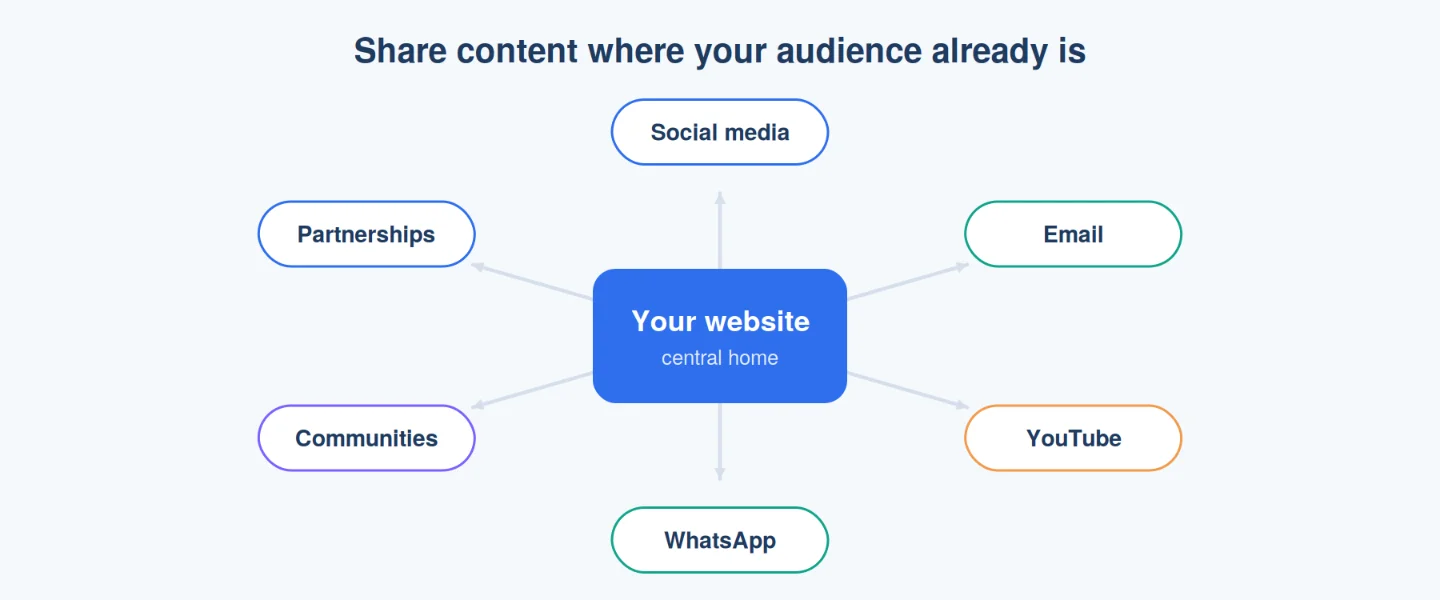
Use your website as the central home. Every channel should lead back to it. You own it. You control it.
Distribute content through:
- Social media
- YouTube
- Online communities
- Partnerships
Adapt content for each platform. A TikTok clip, a WhatsApp message, and a blog post need different formats. Do not post identical content everywhere.
Use paid promotion wisely. Boost content that is already performing well. Do not pay to push content that has not earned attention yet.
If you want an always-on AI assistant for customer questions, we at Truehost offer OpenClaw hosting. It is one practical option for businesses with high message volume.
Distribution brings people in. Search brings them in over time.
7) Implement SEO Strategies
SEO helps customers find you when they are ready to buy. It is slow, but it compounds.
Research how customers search. Find the keywords, questions, and phrases they use before buying.
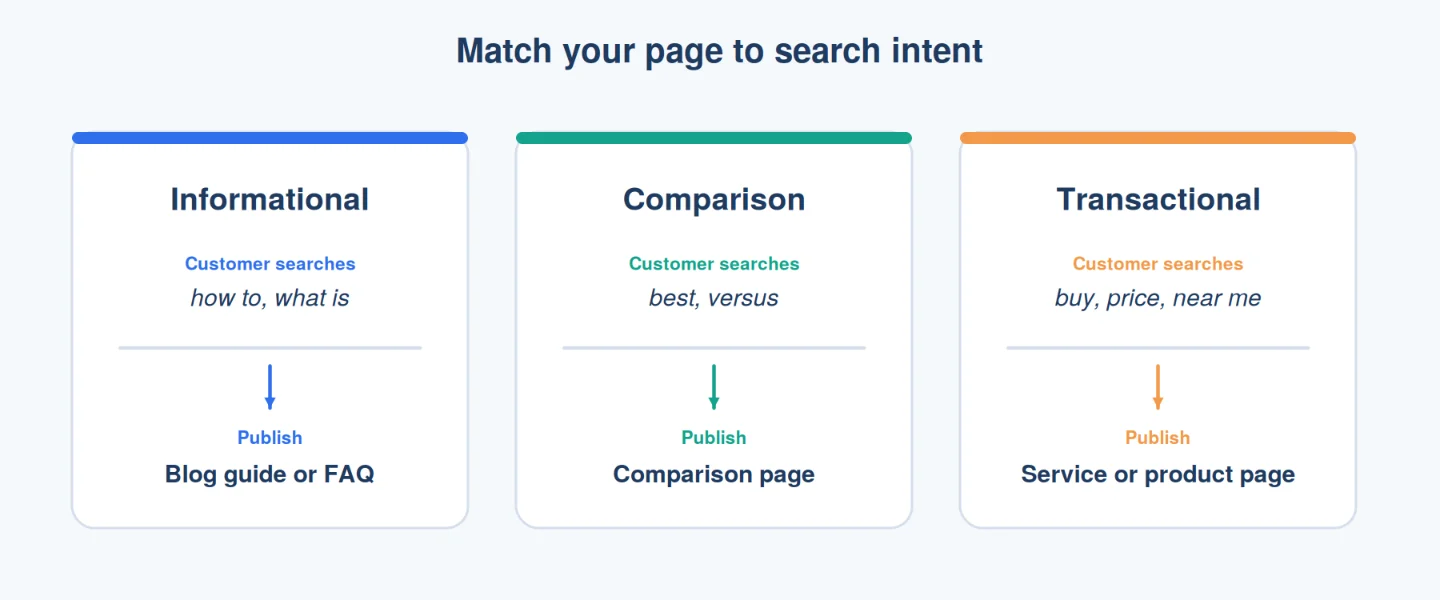
Target three types of search intent:
- Informational: “how to” and “what is” searches.
- Comparison: “best” and “versus” searches.
- Transactional: “buy,” “price,” and “near me” searches.
Optimize the basics. Check your:
- Page titles
- Headings
- Meta descriptions
- URLs
- Images
- Internal links
Create pillar pages. Support each one with related articles and FAQs.
Update older content regularly. Keep it accurate, useful, and competitive.
Site speed also affects how visitors experience your pages. As your traffic grows, you may need more power. Our VPS and dedicated servers give busy websites room to grow.
Search also brings local customers. Let’s make sure they can find you nearby.
8) Use Content for Local Visibility
Many customers search for businesses in their own town. Make it easy for them.
Add local details to key pages. Include your business location, service area, contact details, and local keywords.
Create location-specific pages. Do this if you serve different towns or regions.
Publish local content. Answer questions from customers in your area.
Keep your details consistent. Your business name, address, and phone number should match across your website, directories, and social profiles.
Encourage reviews and show testimonials. BrightLocal’s 2025 survey of US consumers found that 83% use Google to read reviews. Also, 89% expect business owners to respond to reviews. The survey is US-based, but the habit is easy to test with your own customers.
Add clear conversion actions:
- “Call Now”
- “Chat on WhatsApp”
- “Book a Service”
- “Request a Quote”
- “Get Directions”
Once local visitors arrive, keep in touch with them. Email is the best tool for that.
9) Use Email Marketing
Email lets you reach customers without depending on a platform’s algorithm.
Litmus’s 2025 State of Email report found that 35% of marketing leaders earn $10 to $36 for every $1 spent. Another 21% do not measure email ROI at all. Results vary by industry, so track your own numbers.
Build your list with lead magnets:
- Checklists
- Guides
- Templates
- Discounts
- Free consultations
Segment your subscribers. Group them by interests, location, or stage in the buyer journey.
Send valuable emails. Mix newsletters, product updates, offers, and educational content.
Use automated emails for:
- Welcome messages
- Follow-ups
- Abandoned carts
- Customer onboarding
Track what is important: signups, open rates, click-through rates, conversions, and revenue.
A professional address like [email protected] builds more trust than a free email account. Set up business email with us at Truehost and send from your own domain.
Email builds loyalty. Live events build authority.
10) Use Webinars, Workshops, and Influencers
People trust what they can see and hear. Events and creators let them do both.
Host webinars or workshops. Use them to educate prospects, show your expertise, and generate leads.
Choose topics that solve a real customer problem. If the topic is vague, attendance will be low.
Promote every session. Use your website, your email list, and social media.
Partner with the right people. Look for influencers, creators, industry experts, or local business communities whose audience matches yours.
Prioritize relevance, trust, and engagement over follower count. A small, loyal audience often beats a large, distant one.
There are risks. A poor partner can damage your credibility. A rushed event can waste your time.
Track results for each campaign:
- Traffic
- Leads
- Signups
- Sales
Now you have many moving parts. A calendar keeps them organized.
11) Build a Content Calendar
A calendar turns ideas into a routine. It also prevents last-minute panic.
Plan monthly or quarterly. Pick the rhythm you can maintain.
Assign details to every piece. Record the following:
| Field | What to record |
|---|---|
| Topic | The question or problem you will cover |
| Target audience | The persona it serves |
| Format | Blog, video, email, or other |
| Channel | Where it will be published |
| Owner | Who is responsible |
| Deadline | When it is due |
| Call to action | What the reader should do next |
Balance your mix. Include educational, promotional, and customer-story content.
Align with real demand. Plan around seasonal demand, product launches, local events, and business priorities.
Leave room for change. Keep space for customer questions, trends, and new opportunities.
A calendar is only useful if you check results. That brings us to measurement.
12) Measure Conversions and Improve
Measurement shows you what works. It also shows what to stop.
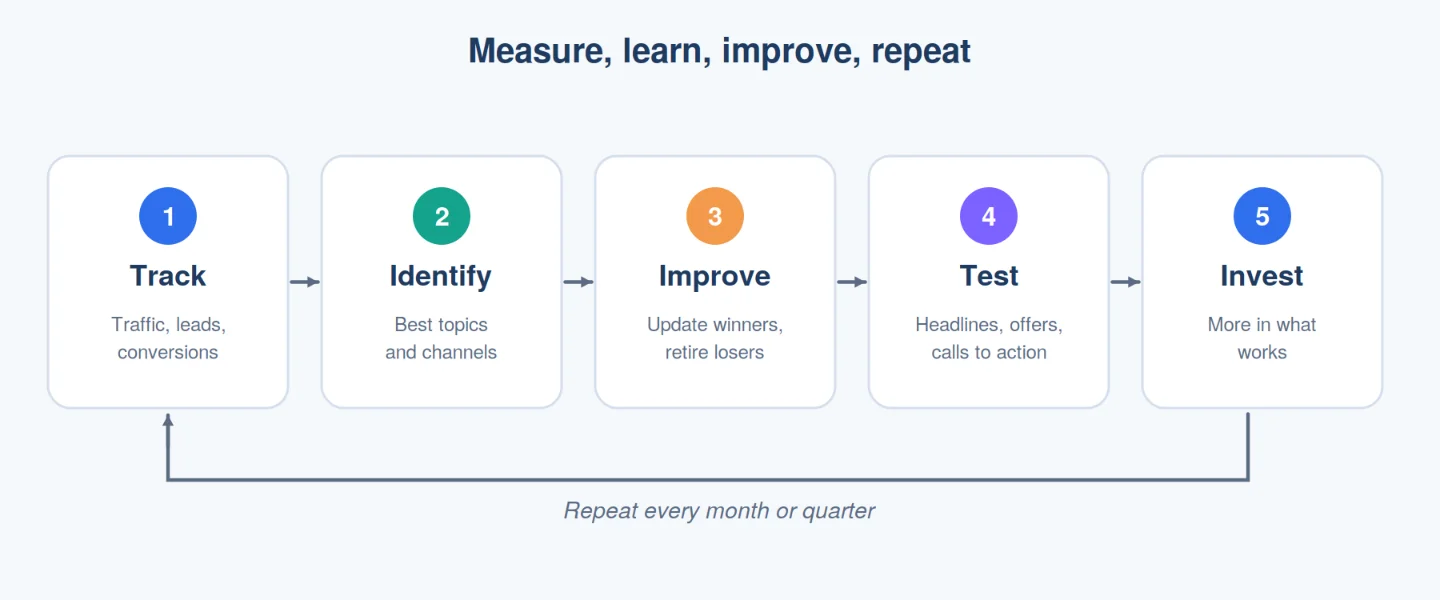
Track the essentials:
- Traffic
- Engagement
- Leads
- Conversions
- Revenue
Set up conversion tracking. Cover form submissions, WhatsApp clicks, calls, email signups, bookings, purchases, and quote requests.
Identify your winners. Find which topics, channels, and content types give the best results.
Act on the data. Update high-performing content. Improve or retire content that underperforms.
Test one change at a time. Try different headlines, formats, offers, landing pages, and calls to action.
Invest where the return is strongest. Move your time and budget toward the channels and topics that deliver.
Manual reporting eats hours. With N8n hosting from Truehost, you can automate tasks like sending form submissions to your inbox or spreadsheet. Our plans make it simple to run your own workflows.
You now have the full process. The last step is choosing where to begin.
Choose Your First Move
A content marketing strategy becomes useful when it helps you make clear decisions: who you are trying to reach, what they need to know, where they will find you, and what action you want them to take.
Instead of trying to do everything at once, choose one starting point based on where your business is today:
- If nobody knows your business yet, start with educational blog posts, short videos, and social media content that answer your customers’ most common questions.
- If people visit your website but do not contact you, improve your calls to action, add customer testimonials, create comparison content, and make it easy to call, WhatsApp, book, or request a quote.
- If you already have customers but want repeat sales, focus on email marketing, customer education, product updates, and helpful post-purchase content.
- If you serve customers in a specific town or area, prioritize local SEO, location-based pages, reviews, and community-focused content.
- If you want to build authority in your industry, publish detailed guides, case studies, videos, webinars, and expert interviews.
Whichever starting point you choose, your website should be the place where interested readers can learn more, contact you, or buy.
Get Started With An Affordable and Reliable Provider
A domain name, reliable hosting, and a professional email address give your content a permanent home and make your business easier to find and trust.
Ready to put your strategy into action? Register a domain, choose a hosting plan, and set up professional business email with Truehost to start building an online presence that supports your content marketing goals.
