Starting an online store no longer means hiring a developer or learning how to code. Ecommerce website builders make it easier to create a store, showcase products, accept payments, and manage orders from one place.
However, choosing the right platform takes more than looking at its design templates. You need to consider pricing, payment options, ease of use, customisation, and the features you need to run your business.
If you are creating your first online shop or expanding an existing business, this article covers five of the best ecommerce website builders to consider.
The platforms covered here take different approaches. Some are designed for beginners who want a store online quickly, while others give experienced users more control. Some are better suited to a small catalogue, and others to a business with many products and sales channels. Reading about each one will help you see which approach fits your situation.
Ready to start now? Explore the Truehost Uganda Website Builder and see which plan fits your online store.
5 Best Ecommerce Website Builders at a Glance
| Website Builder | Best For | Starting Price | Main Advantage |
|---|---|---|---|
| Truehost Uganda Website Builder | Ugandan businesses and new online stores | USh 136,021.00 | Website building and ecommerce tools in one place |
| Olitt AI Website Builder | Beginners and small businesses | From $36/year for the Starter Website plan | AI-powered website creation |
| Shopify | Businesses focused on online selling | $29/month | Dedicated ecommerce features |
| WooCommerce | WordPress users | Free core plugin; hosting costs extra | Flexibility and customisation |
| Wix | Beginners and small businesses | $29.77/month | Visual editing and integrated store tools |
Starting prices are only a first filter. Providers bill in different ways (yearly or monthly), and a starting price rarely covers everything you need to run a store.
It also helps to know the three types of platform in this list:
- Hosted website builders (such as Shopify and Wix) provide the software, hosting, and security in one subscription. You work in a dashboard, and the provider maintains the technical side.
- AI-powered website builders (such as Olitt) generate an initial website, including layouts and content, from details about your business. You then edit the result. This can shorten the time to a first draft.
- Self-hosted ecommerce solutions (such as WooCommerce) are software you install on your own WordPress site and hosting. You get more control and flexibility, but you are responsible for hosting, updates, security, and maintenance.
1) Truehost Uganda
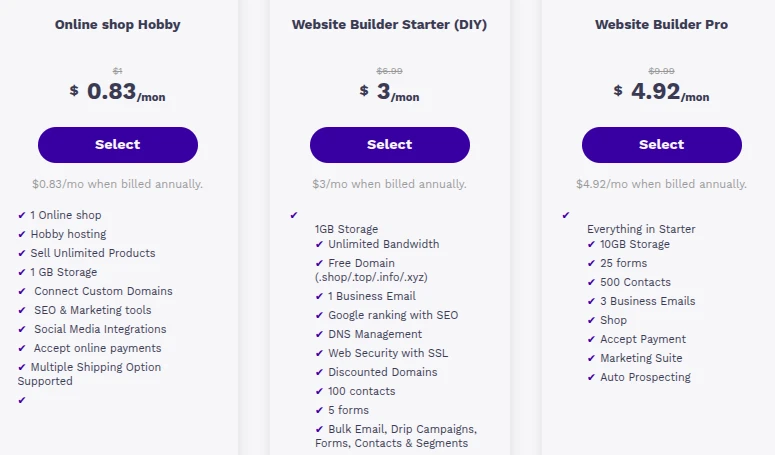
Truehost Uganda Website Builder is aimed at people who want to build a website and start selling online in a single place. For entrepreneurs who are new to online selling, having website creation and ecommerce tools together can make the first steps simpler.
Key Features
- Website-building tools for creating an online presence
- Ecommerce features for setting up an online shop
- Product listings and online selling tools
- Website hosting and SSL options, depending on the plan
- Design options for different business needs
- Tools to help businesses establish and manage their websites
In practice, this means you can set up a website, list products, and publish your store without assembling separate tools. An SSL certificate encrypts the connection between your store and its visitors, which matters whenever customers enter personal details. Because web hosting and SSL options depend on the plan, check what your chosen plan includes before you buy. You will also need a web address for your store, which you can register as a domain with Truehost.
Pricing
USh 136,021.00This is the starting price for the website builder. As with any platform, consider your total operating costs, such as domain registration, additional features, and payment processing fees, rather than relying on the starting price alone.
Best For
- Ugandan entrepreneurs starting an online store
- Small and medium-sized businesses
- Retailers moving their businesses online
- Beginners who want to build a website without coding
- Businesses looking for website creation and hosting solutions together
A shop owner with a physical store, for example, could use a builder like this to put a catalogue online without hiring a developer. If you would rather have someone else build the site, Truehost also offers a web design service.
Pros and Cons
- Pros: Convenient website setup, ecommerce functionality, and a practical starting point for businesses building an online presence.
- Cons: Check the available payment integrations, design flexibility, and advanced store features to ensure they meet your business needs.
Payment options deserve particular attention for businesses in Uganda. Customers there often pay with mobile money, so it is worth asking Truehost which payment methods and gateways work with the builder before you choose a plan.
2) Olitt AI Website Builder
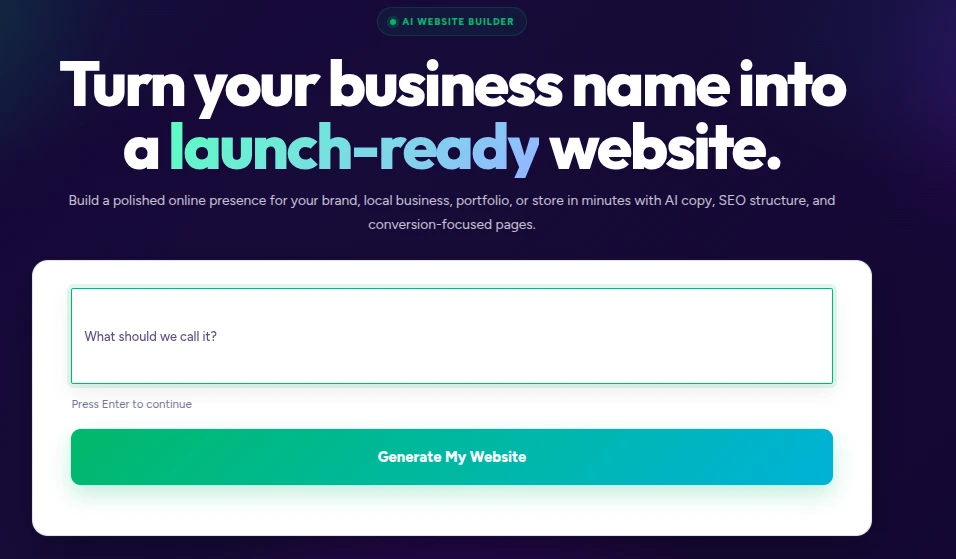
Olitt takes an AI-first approach. You describe your business, and the builder generates a starting website that you can then adjust. This can be helpful if you are unsure where to begin with layouts and content.
Key Features
- AI-powered website creation
- Website content and layouts generated from your business details
- Visual editing tools for updating pages
- Built-in hosting and SSL
- SEO and marketing tools
- Online shop features for product listings, checkout links, and order management
AI-generated content gives you a draft rather than a finished site. You will still want to review the text, check that product details are accurate, and adjust the design so it reflects your brand. The visual editing tools let you update pages without code, and built-in hosting and SSL mean you do not need to arrange those separately.
Pricing
Olitt’s Starter Websites plan starts from $36 per year.
Check which features belong to which plan, since the shop and marketing tools you need may sit on a higher tier than the starter option.
Best For
- Beginners who want to create a website quickly
- Small businesses
- Entrepreneurs testing a business idea
- Service providers who also want to sell products
- Businesses interested in AI-assisted website design
A consultant who wants to add a few products alongside services, or someone testing if a product idea will sell, may find this lighter approach appealing.
Pros and Cons
- Pros: AI-assisted setup, included hosting, and tools for website creation and marketing.
- Cons: Check if the available shop, checkout, and payment features support your products and preferred payment methods before choosing a plan.
3) Shopify
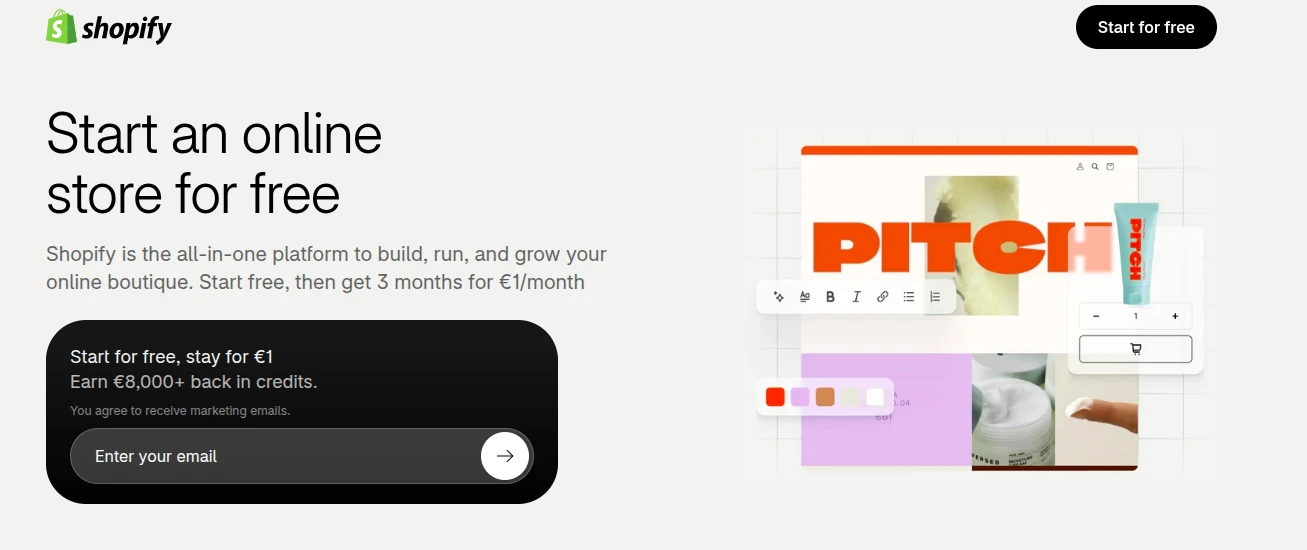
Shopify is a hosted platform built around selling online. Its tools are designed for managing products, orders, and customers rather than general-purpose websites.
Key Features
- Ecommerce-focused website templates
- Product and inventory management
- Order and customer management
- Payment gateway integrations
- Shipping and fulfilment tools
- App integrations and additional sales channels
Inventory management helps you track stock so you do not sell items you no longer have. Payment gateway integrations connect your store to services that process customer payments. Fulfilment tools help you handle shipping, and apps and sales channels let you add features or sell in more places than your own website.
Pricing
Starting with $29/month
Shopify’s entry price is only part of the cost picture. Paid apps, payment processing fees, and premium features can add to your monthly spending, so estimate your total costs before you subscribe.
Best For
- Businesses focused on ecommerce
- Retailers managing larger product catalogs
- Brands selling through multiple channels
- Businesses planning to expand their online sales
If selling online is the core of your business and you expect to grow, the dedicated features are a good match for that goal.
Pros and Cons
- Pros: A broad range of ecommerce tools and integrations.
- Cons: Subscription fees and paid apps can increase the overall cost of running a store.
For businesses in Uganda, confirm which payment gateways are available for your location and if they support the methods your customers actually use, including mobile money.
4) WooCommerce
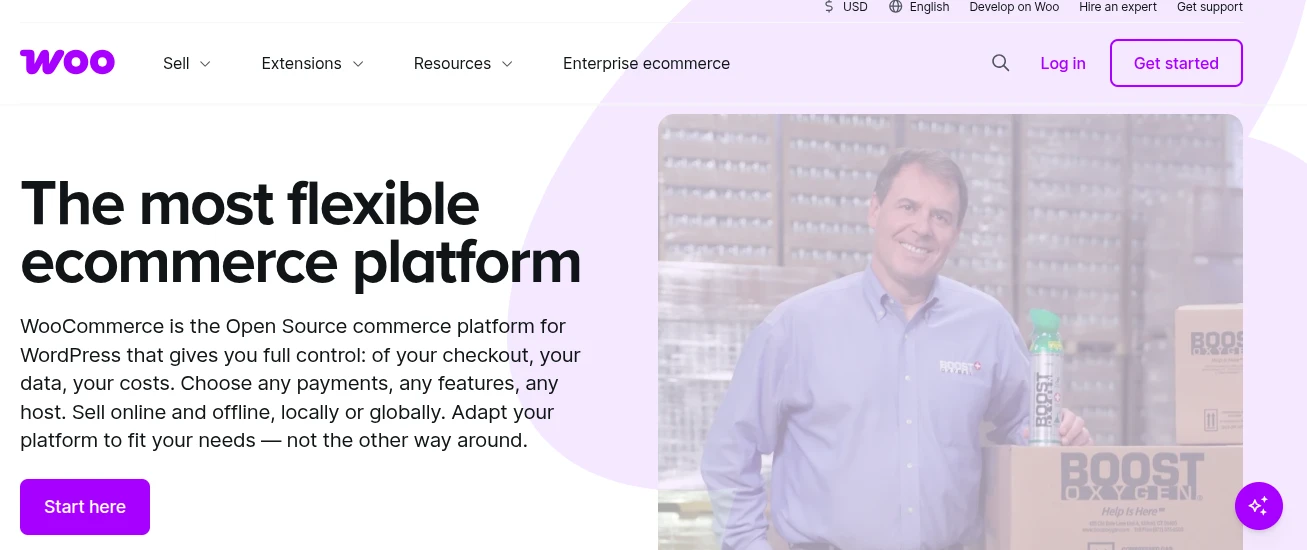
WooCommerce is different from the other options. It is a plugin for WordPress, which means you build your store on a WordPress website that you host yourself. This is the self-hosted approach described earlier.
Key Features
- Ecommerce functionality built for WordPress
- Product and inventory management
- Customisable product pages and checkout
- Extensions for payments, shipping, and marketing
- Access to WordPress themes and plugins
- Control over hosting and website configuration
Because WooCommerce sits on WordPress, you can use the large library of themes and plugins to shape how your store looks and works. Extensions add features such as payment methods, shipping options, and marketing tools. Having control over hosting and configuration means you decide where your store lives and how it is set up.
Pricing
The core WooCommerce plugin is free, but you will need to account for hosting, domain registration, and any paid themes, extensions, or maintenance services.
A free plugin does not mean a free store. Add up hosting, your domain, and any extensions you need to understand what your store will really cost.
Best For
- Businesses already using WordPress
- Store owners who want more control over their website
- Businesses requiring customised ecommerce features
- Users comfortable managing WordPress
If you already run a WordPress site and want to add a shop to it, this can be a natural fit.
Pros and Cons
- Pros: Flexible customisation and a large ecosystem of extensions.
- Cons: Setup, maintenance, security, and additional costs may require more technical involvement.
You are responsible for keeping WordPress, themes, and plugins updated, and for securing and backing up your site. If you do not want to handle that yourself, budget for someone who can.
5) Wix

Wix is a hosted builder known for its visual editor. It works for general websites as well as online stores, so it can suit businesses that want a strong brand presence alongside their shop.
Key Features
- Visual drag-and-drop website editor
- Customisable ecommerce templates
- Product and order management
- Payment and shipping integrations
- SEO and marketing tools
- Website management through one dashboard
A drag-and-drop editor lets you place text, images, and buttons wherever you want on a page without writing code. Managing the website and store from one dashboard keeps day-to-day tasks in a single place. You can see how it works on Wix’s ecommerce page.
Pricing
Starting with $29.77/month
Check which plan includes the ecommerce features you need, because not every plan supports online selling in the same way.
Best For
- Beginners creating their first online store
- Small businesses
- Entrepreneurs selling a manageable range of products
- Businesses that prioritise design and ease of use
A small boutique or a creator selling a limited range of products could build a polished store here without technical skills.
Pros and Cons
- Pros: Visual editing tools and an accessible website-building experience.
- Cons: Some ecommerce capabilities depend on the selected plan, and migrating to another platform may require additional work.
Think about the long term before you build. If you later move to another platform, you may need to rebuild parts of your store, so choose a builder you are comfortable staying with.
FAQs
Do I need to buy a domain separately for my online store?
It depends on the platform and plan. A domain is your store’s web address, such as yourstore.com. Some providers include a domain with certain plans, some let you register one through them, and others expect you to buy it from a registrar and connect it. Check what your plan includes, and remember that domains usually need to be renewed each year. If you need one, you can search and register a domain with Truehost.
Can I connect my online store to social media?
Many ecommerce platforms let you link your store to social media channels, either through built-in tools or apps and extensions. The options differ by provider and plan, so confirm that the platform supports the channels you want to sell on before you commit.
Do ecommerce website builders provide website security?
Most hosted builders include basic security measures, such as SSL certificates, but the details vary by provider and plan. With a self-hosted solution like WooCommerce, you are responsible for hosting security, updates, and backups. Whichever route you choose, use strong passwords and keep your store’s software up to date.
Which ecommerce website builder is best for a small business?
There is no single answer, because it depends on your budget, products, and technical comfort. Beginners often prefer a hosted or AI-powered builder for its simpler setup. A business that wants more control and has WordPress experience may prefer WooCommerce. If you sell mainly in Uganda, check payment options carefully, including mobile money, before choosing.
Can I change website builders after launching my store?
Yes, but it can take work. You may need to export your product data, rebuild your design, reconnect your domain, and set up redirects so customers and search engines can still find your pages. Some platforms make this easier than others, so consider how easy it would be to move before you build.
Can I manage my online store from my phone?
Many platforms offer mobile apps or mobile-friendly dashboards that let you check orders, update products, and track sales on the go. Availability and features differ between providers, so confirm what is offered before you choose.
How to Choose the Best Ecommerce Website Builder
The best ecommerce website builder depends on what you want to sell, your budget, and how you plan to run your business. Before making your choice, consider these factors:
1) Compare the Total Cost
Look beyond the starting price. Account for hosting, domain renewals, payment processing fees, premium features, and other recurring expenses.
For example, a monthly subscription may look expensive next to a low yearly price, but the cheaper plan might lack features you need. Write down every cost you expect over a year and compare platforms on that basis.
2) Check Payment Options
Make sure the platform supports payment methods your customers use. For businesses in Uganda, check if local payment options, including mobile money, are available through the platform or compatible payment gateways.
If customers cannot pay the way they prefer, they may abandon their purchase. Ask each provider directly, and test the checkout process before you launch.
3) Consider Ease of Use
Choose a builder that matches your technical experience. AI-powered and drag-and-drop tools can simplify setup, while more flexible platforms may require additional configuration.
Many builders offer free trials or demos, allowing you to test the tools before paying.
4) Review Ecommerce Features
Check if the platform supports the products you sell, inventory tracking, order management, shipping, and the checkout options your customers need.
A store selling digital downloads has different needs from one shipping physical goods, so match the features to your products.
5) Think About Future Growth
Choose a platform that can accommodate more products, increased traffic, and new sales channels as your business expands.
Starting small is fine, but make sure you can upgrade without rebuilding everything.
Whichever of these best ecommerce website builders you choose, weigh these five factors against your own business rather than relying on a single feature or price.
Explore Truehost Uganda Website Builder
