Entry-level reseller hosting starts at about $20 a month, before the software and payment fees that most price lists leave out. Providers advertise promotional rates that rise at renewal, so the number on the sales page is rarely the number you budget against.
Reseller hosting lets you buy server space and a control panel from a provider, then sell hosting accounts under your own brand, with your own prices and support.
The cost sets your margin, your minimum price per client, and how much cash you need before the first sale. Truehost entry-level plans typically cost USh 961,740.00 per month on promotional rates and renew at around $22–41.
This article covers current price ranges, the factors that move them, costs outside the plan price, and how to pick a plan that fits your budget.

What Are You Paying For?
A reseller plan bundles seven things. Knowing which ones a provider includes tells you whether a low price is a bargain or a gap you will fill later.
- Server resources: storage, bandwidth, CPU and RAM. Storage is shared across every client account you create, so 50GB split across 25 sites leaves 2GB each.
- Account limits: the number of cPanel accounts you can create. Truehost’s Silver plan, for example, allows 50 accounts and 50GB.
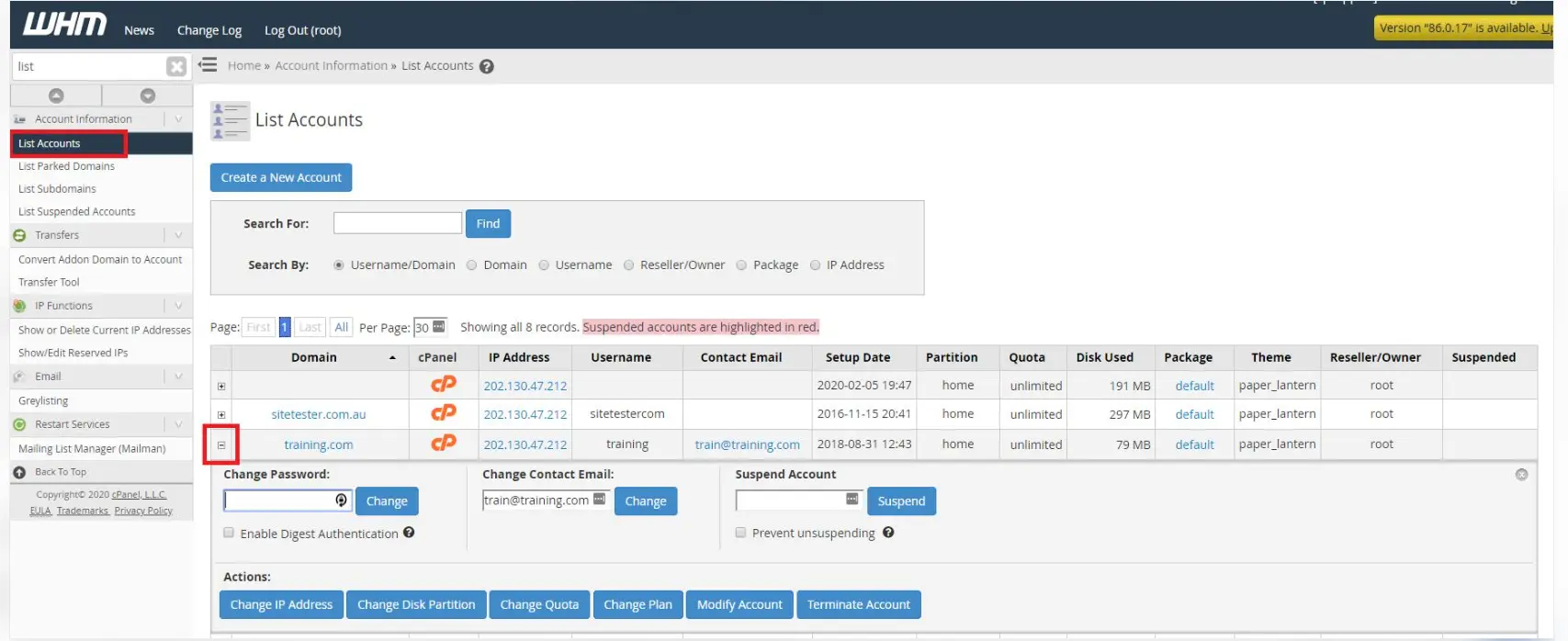
- Control panel: WHM to create and manage accounts, and cPanel for each client’s own dashboard. cPanel is licensed per account, which is why providers cap account counts.
- Billing software: tools such as WHMCS that handle signups, invoices, renewals and suspensions. Some providers bundle a licence; many do not.
- Technical support: help from the provider with server faults, migrations and panel issues. This is support for you, not for your clients.
- Security features: SSL certificates, backups, malware scanning and server-level protection.
- Licensing fees: providers that pass control panel or software costs through list them as a separate line item.
Current Reseller Hosting Price Ranges
The number of accounts a plan allows has a big effect on its price. The four providers below offer plans for 5 to 50 accounts. Among the UGX-priced plans, the cost per account ranges from UGX 2,500 at JulyHost to UGX 25,000 at Webstar.
Prices vary depending on the provider, storage, resources, and billing period. In Uganda, several providers charge in UGX. Truehost also offers Silver at USh 89,014.38 per month. It includes 50GB storage, WHM/cPanel, and private nameservers.
| Provider / Plan | Intro Price | Account Limit | Storage / Bandwidth | Control Panel |
| Truehost – Silver | USh 961,740.00 | 50 accounts | 50GB | WHM/cPanel |
| Momentum Hosting | UGX 71,500/month | 25 accounts | 50GB–150GB NVMe | WHM/cPanel |
| JulyHost | From UGX 300,000/year | 10 accounts | 50GB–200GB NVMe | cPanel |
| Webstar | From UGX 1,500,000/year | 5 accounts | 25GB–Unlimited | WHM/cPanel |
How to Calculate Cost Per Account
Divide the monthly plan price by the maximum number of accounts allowed.
Cost per account=Monthly price/Maximum accounts
For example, a plan that costs UGX 100,000 per month and allows 50 accounts costs UGX 2,000 per account when all slots are filled.
Here is how the providers compare using their introductory prices:
- Momentum Hosting: UGX 71,500 ÷ 25 = UGX 2,860 per account monthly.
- JulyHost: UGX 300,000 ÷ 12 ÷ 10 = UGX 2,500 per account monthly.
- Webstar: UGX 1,500,000 ÷ 12 ÷ 5 = UGX 25,000 per account monthly.
- Truehost Silver: UGX 961,740.00 ÷ 50 = about UGX 19,235 per account monthly.
These figures assume you use every available account slot. If you have only 10 clients on a 50-account plan, your cost per active client will be five times higher.
A low price per account does not always mean a plan is the best deal. Also check:
- Support quality: How quickly does the provider respond, and does support cover reseller hosting issues?
- Backups: Are backups included, how often are they made, and can the provider restore them?
- Private nameservers: These help you sell hosting under your own brand.
- WHMCS: Check if the billing software is included or costs extra.
Factors That Affect Reseller Hosting Costs
Reseller hosting prices depend on the number of accounts, server resources, software licences and extra features. Other costs include billing periods, support and server location.
Here are the main factors that affect the price:
- Number of cPanel accounts: Plans that allow more accounts usually cost more. This is because cPanel charges providers based on the number of accounts they host. For example, a Premier licence covers 100 accounts at $69.99 per month, with extra charges for additional accounts.
- Storage type and space: NVMe storage is faster than regular SSD storage, while SSD is faster than HDD. Plans with faster storage and more space usually cost more. Check if storage is shared across all accounts or limited per client.
- Server performance: Features such as CloudLinux, LiteSpeed and dedicated CPU and RAM resources can increase the price. They also help websites run smoothly when traffic increases.
- Software licences: Billing tools such as WHMCS may come at an extra cost. Its plans start at $34.95 per month for up to 250 clients. Some providers include the licence in their reseller plans.
- Billing period and renewal rates: Paying for a longer period can reduce the monthly price. For example, Truehost Silver costs USh 961,740.00 per month but drops to $19.99 on a three-year plan. Check the renewal price because promotional rates usually apply only to the first term.
- Customer support: Providers that offer quick support, free website migration, and help with reseller accounts may charge more.
- Server location: Hosting servers closer to your customers can improve website loading speeds. Some businesses also need servers in specific countries to meet data storage requirements.
- White-label features: Private nameservers and the ability to remove the hosting provider’s branding allow you to sell hosting under your own brand. These features may cost extra.
- Extra services: Dedicated IP addresses, additional backups, premium SSL certificates, email filtering and Softaculous may be charged separately.
- Provider licensing costs: Hosting providers pay for software such as cPanel, WHMCS and Plesk. When these companies increase their licence fees, hosting providers may also raise their prices.
Hidden and Extra Costs of Reseller Hosting
The price of a reseller hosting plan is not the only cost to consider. Billing software, payment fees, customer support and marketing can increase your expenses. Include these costs when setting your prices.
- Billing software (WHMCS, Blesta): If your provider does not include billing software, you will need to pay for it separately. WHMCS costs $34.95 per month for up to 250 clients, $54.95 for 500 clients and $84.95 for 1,000 clients.
- Payment processing fees: Payment platforms such as Stripe charge fees for every transaction. For domestic online card payments, Stripe charges 2.9% plus $0.30. International cards and currency conversions may attract extra fees. These charges reduce your profit, especially on small payments.
- Your time: You will spend time setting up client accounts, moving websites, fixing email problems and answering support questions. Too many support requests from low-paying clients can reduce your profit.
- Domain registration fees: If you also sell domain names, you may need a separate domain reseller account. Some registrars require an initial deposit or minimum payment.
- Marketing costs: You may spend money on adverts, website development, business directories and referral commissions to attract customers.
- Extra storage and account limits: If you exceed your plan’s storage or account limit, you may need to upgrade to a more expensive package.
- SSL, backups and security tools: Basic SSL certificates and backups may be included, but advanced security scans, off-site backups and wildcard SSL certificates may cost extra.
- Poor hosting performance: Frequent downtime and slow customer support can make clients leave. This can damage your business reputation and cost you more than you would save with a cheaper hosting plan.
Calculate all these expenses before setting your hosting prices. This helps you avoid charging clients less than it costs to serve them.
How to Choose a Reseller Hosting Plan That Fits Your Budget
Pick the plan you can carry for 12 months at the renewal price with zero or few clients. Work through these seven checks in order.
i) Your starting budget. Choose a plan you can afford without depending on immediate sales. Use the renewal price, not the intro price.
ii) Number of clients. Estimate how many websites you expect to host in the first year. Buy the smallest tier that covers that number with room to spare.
iii) Available resources. Check storage, bandwidth, CPU, RAM, and the account limit. Ask whether storage is pooled or capped per account.
iv) Included features. Look for WHM, cPanel, private nameservers, SSL and backups. Confirm whether WHMCS is included.
v) Billing terms. Compare monthly, annual and multi-year prices, including what the plan renews at.
vi) Upgrade options. Choose a provider that lets you add resources without migrating your clients to a new server.
vii) Technical support. Check whether the provider answers reseller tickets and how quickly. Test it with a pre-sales question before you pay.
Before you commit, work out how many paying clients cover the plan:
\text{Break-even clients} = \frac{\text{Monthly plan cost}}{\text{Client price} - \text{Payment fee per client}}Example: a plan that renews at $41 a month, a client price of $4 a month, and a Stripe fee of $0.42 per charge (2.9% + $0.30) leaves $3.58 per client. $41 ÷ $3.58 = 11.5, so you need 12 paying clients before the plan costs you nothing. Billing clients annually instead of monthly cuts the fixed $0.30 charge to once a year per client.
Start Small and Grow Your Reseller Hosting Business
You don’t need the most expensive reseller hosting plan when starting. Choose a plan that supports your first 10 to 20 clients and upgrade as your customer base grows. This helps you avoid paying for account space you are not using.
Also, check the billing period before signing up. Truehost Silver costs $19.99 per month on a three-year plan, but you must pay $719.64 upfront. If you prefer to pay monthly, the listed price is $24.99.
The Truehost Silver Reseller plan gives you 50 cPanel accounts, 50GB storage, WHM/cPanel and private nameservers. You can use these features to create and manage hosting accounts under your own brand.
Ready to start your hosting business? Check out Truehost Uganda’s reseller hosting plans, compare the available options and pick a plan that fits your budget.
Reseller Hosting Cost FAQs
Is reseller hosting profitable?
Yes, when the price you charge per client exceeds your plan, software and payment costs. Profit depends on filling the account slots you pay for. Use the break-even formula above to find the number of clients you need.
Can I start a reseller hosting business with $20?
Yes, with limits. Entry-level plans start at about $20 a month, but that rate may require a multi-year term paid upfront. You also need to budget for billing software, payment fees and your own time.
Do I need to buy a server for reseller hosting?
No. The hosting provider supplies, secures and maintains the server. You manage client accounts through WHM.
Does reseller hosting include WHMCS?
Some providers include it and others charge a separate licence fee. WHMCS lists from $34.95 a month in 2026, so a bundled licence is a material saving.
How much should I charge my hosting clients?
Start from your cost per account, add billing and payment fees, then set the price against competitors in your market and the margin you need. Check your price against the break-even calculation before you publish it.
Can I upgrade my reseller hosting plan later?
Yes. Most providers allow upgrades as your client base and resource needs grow. Confirm whether an upgrade moves your clients to a new server and whether it resets your billing term.
What is the difference between reseller hosting and VPS hosting?
Reseller hosting lets you sell hosting accounts under your own brand through WHM and cPanel. VPS hosting gives you more control over a virtual server and its resources, but you manage the server and its software yourself.
