Finding a suitable domain name can be hard when the name you want is already registered. Instead of settling for a weaker alternative, you may be able to buy the registered domain through an auction. Domain auctions are marketplaces where individuals and businesses buy and sell names, often through competitive bidding. If you only need a name that is free, you can search for an available domain first and skip the auction entirely.
A domain auction is an online sale where a registered domain name is offered to buyers who compete by placing bids. Some auctions feature domains listed by their current owners, while others feature expired domains released through registrars or specialised platforms. Depending on the platform, a name may sell through competitive bidding, a fixed price, or a closeout sale.
If you are asking how do domain auctions work, this article covers the stages of an auction, the main auction types, the bidding process, what drives price, how to sell, and the risks to check before you spend money.
The Main Stages of a Domain Auction
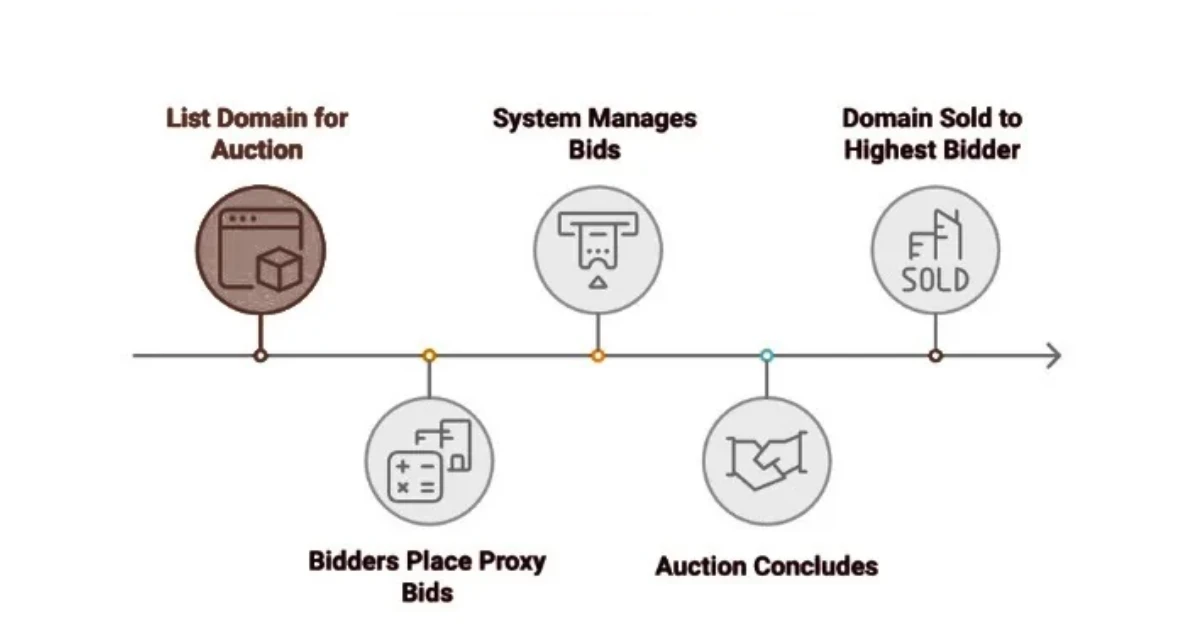
- A domain becomes available for sale. The current owner, a registrar, or an auction platform decides to offer the name.
- The domain is listed. The listing shows the name, extension, auction length, and starting price, and often a description and basic statistics.
- Buyers review the listing. Interested buyers assess the name’s value, history, and fit for their project.
- Buyers bid or make offers. Participation follows the platform’s rules, which differ from one marketplace to another.
- The auction closes. It ends at a scheduled time or under the platform’s closing conditions, for example when late bids extend the deadline.
- The winner pays and receives the domain. The buyer pays within the deadline and follows the platform’s transfer or account delivery process.
A hypothetical example shows the flow. A seller lists a name for a five-day auction. A buyer bids on day two, is outbid on day four, and raises the bid on the last day. The auction closes, the buyer pays, and the seller pushes the domain to the buyer’s account. These are invented steps, not a real result.
Types of Domain Auctions
1) Expired Domain Auctions
These are domains whose previous owners did not renew them. Once a name lapses, it moves through a registrar’s expiration process, which usually includes a grace period before the name is released. Some registrars and auction platforms offer eligible expired names to buyers during or after that process, and the highest bidder gets the domain.
This differs from a domain drop. In a drop, the name finishes the expiration process and becomes available for ordinary registration again, so whoever registers it first gets it. An auction means bidding before that point. Not every expired domain goes to auction, and the steps depend on the registrar and the extension.
Expired names attract buyers because they can come with history, backlinks, or brand appeal. Before bidding, check what the domain was used for. A past tied to spam or scams can make it a poor purchase however attractive the name looks.
2) Private Domain Auctions
In a private auction, the current owner lists the name directly. Owners use auction platforms to reach buyers they could not find on their own. Unlike registrar-managed expired auctions, the seller decides the starting bid, any reserve price, and how long the auction runs.
Unique or highly desirable names can draw competitive bids, but a listing alone does not mean buyers will show up. Check the seller’s reputation and the platform’s rules on payment and transfer before you bid.
3) Premium Domain Auctions
Premium domains are names considered valuable because of their length, simplicity, keywords, or commercial potential. They are usually offered through specialised marketplaces and auction platforms. Short, memorable, and industry-relevant names tend to attract higher bids because many businesses could use them.
A premium listing differs from an ordinary aftermarket domain mainly in price and competition. Ordinary names may sit at modest prices with little interest, while premium names can carry high asking prices. Compare the asking price with the name’s likely use and with similar sales, since a “premium” label is not proof of value.
4) Closeout Auctions
Some platforms offer a name at a reduced price after an auction ends without a qualifying winning bid. The sale moves from competitive bidding to a fixed-price purchase, and the price may drop over a set closeout period.
Buyers need to act with care here. A falling price can tempt you to wait, but another buyer may take the name first. Closeout rules differ between platforms, so read them before relying on how they work elsewhere.
How Does the Domain Auction Bidding Process Work?
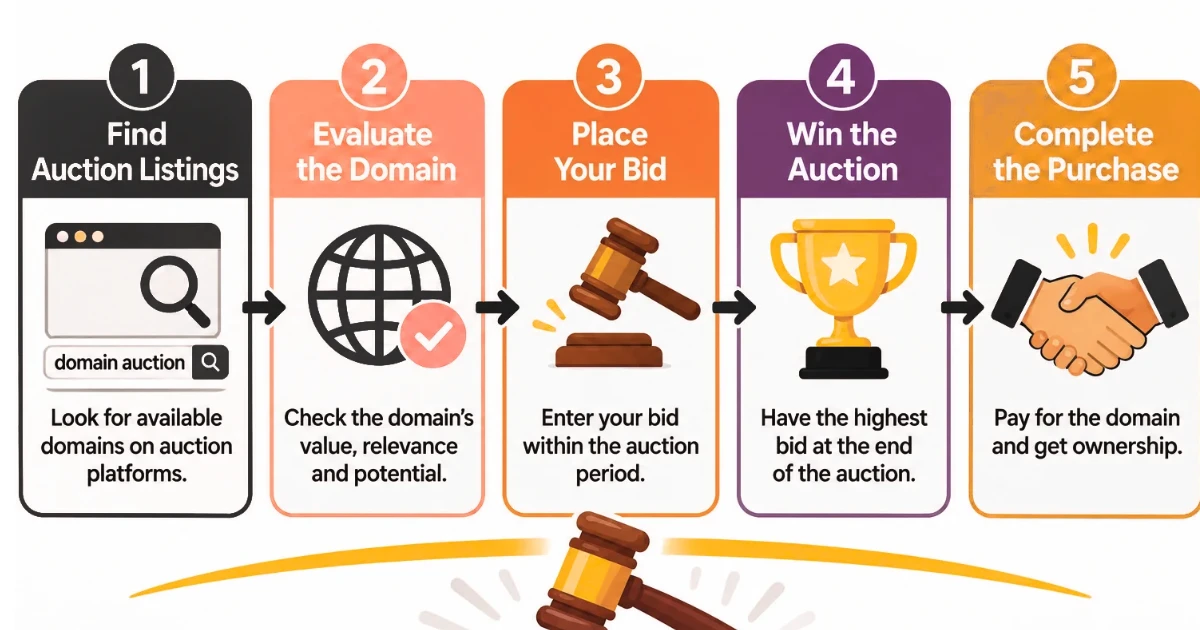
1) Find a Domain Auction Listing
Choose a platform that offers the type of domain you want, then search by keyword, extension, or category. Open each listing and check its status. Look for the starting bid, current bid, reserve price, and closing time where they are shown.
Some terms are worth knowing. The starting bid is the lowest opening price. The current bid is the highest bid so far. A reserve price is a hidden or stated minimum the seller will accept, and if bidding does not reach it, the name may not sell. Procedures vary by platform, so check each listing’s rules.
2) Create an Auction Account
Register on your chosen platform and provide the personal or business details it asks for. Verify your email address and complete any account checks. Read the bidding rules, payment requirements, and buyer policies, and add a payment method if one is required. Check which payment options are accepted, and note any currency conversion if you pay from Uganda in US dollars. If you plan to hold the name long term, register your own domain account details carefully so renewal notices reach you.
3) Research the Domain Before Bidding
Research is where most buyers protect themselves. Work through these checks:
- Registration history: Run a WHOIS lookup or use ICANN Lookup to see the registrar, creation date, and expiry date.
- Previous content: Browse archived copies of old pages through the Wayback Machine to see what the site once showed.
- Backlinks and traffic: Review these where reliable data exists. Third-party metrics are estimates, so treat them with caution.
- Spam and penalties: Look for signs the name was linked to spam, malware, or search engine issues.
- Brand and keyword fit: Judge whether the name suits your purpose and extension.
- Trademarks: Search the WIPO Global Brand Database and local records for conflicts.
- Comparable sales: Compare similar names to estimate a fair value. A domain appraisal can give a starting figure, but it is an estimate, not a guarantee.
4) Place Your Bid
Enter the amount you are willing to pay, and check the minimum bid and increment rules. Platforms vary. With manual bidding you raise your bid yourself. With proxy bidding or automatic bidding, you set a maximum and the system bids for you in small increments up to that limit.
Decide your maximum before the auction starts. For example, if comparable names appear to sell between UGX 400,000 and UGX 700,000, you might cap your bid at UGX 600,000 and stop there. That figure is hypothetical. Monitor competing bids, but do not raise your limit just because others are bidding.
5) Wait for the Auction to Close
Watch the closing time and bidding activity. Some platforms extend the auction when a bid arrives near the end, so the scheduled time is not always the final one. When bidding ends, confirm whether your bid is the highest qualifying offer and whether the reserve price was met. Read the result carefully before assuming you have won.
6) Complete Payment and Domain Transfer
Pay within the deadline and confirm the final amount, including any transaction fees. Then complete the transfer or account push the platform requires. Check that the domain appears in your registrar account and that you control its DNS and renewal settings. Turn on a domain lock once the name is in your account.
How Is the Price of a Domain Determined at Auction?
No single factor decides price. Buyers weigh several at once.
1) Domain Length and Simplicity
Short names are easier to remember and type, and simple spelling reduces visitor errors. Memorable names can have stronger branding potential. Unusual combinations of words or characters may limit the number of interested buyers.
2) Domain Extension
.com, .org, and .net are widely recognised, while country-code extensions can appeal to businesses aimed at a specific market. For Uganda, .ug suggests a local presence, and you can check options on Truehost’s domain registration page. Familiarity affects buyer confidence, and an extension’s value depends on its intended use and demand.
3) Keyword Relevance and Brand Potential
Names that include relevant industry or product keywords can attract buyers who expect search interest. Brandability, memorability, and ease of pronunciation matter too. Avoid names that could create trademark or brand conflicts, since they carry legal risk whatever they cost.
4) Existing Traffic and Backlinks
Genuine website traffic can add value, and quality backlinks can help a domain’s search visibility. Check where the traffic comes from and what kind of sites link to the domain. Artificial traffic, spam links, and manipulated metrics are real risks.
5) Domain History and Reputation
Previous content and ownership records show how the name was used. A history of spam, scams, or malicious activity, or past search engine penalties, can limit future usability. Even a clean history may not suit your purpose, so consider how the old use relates to your plans.
How to Sell a Domain Through an Auction
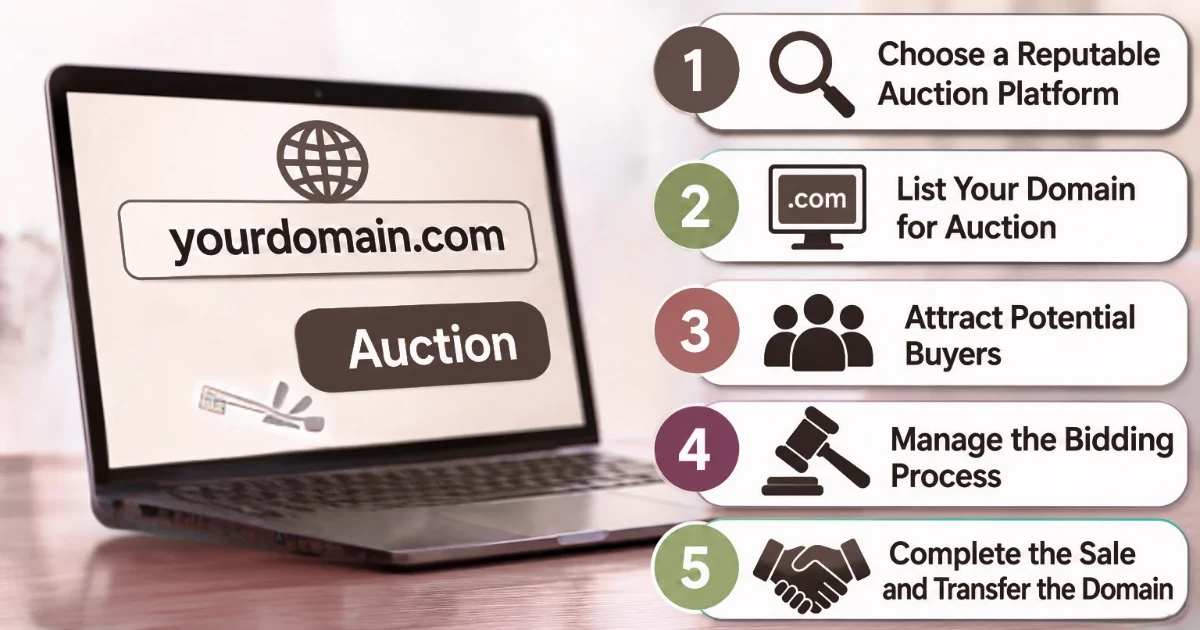
1) Choose a Domain Auction Marketplace
Look for platforms that let owners list names. Compare listing fees, commission rates, and payment policies, and review seller requirements. Consider the type of buyers each marketplace attracts. Fees and rules differ, so check current terms.
2) Prepare Your Domain for Sale
Confirm you own the domain and can transfer it. Check its registration and renewal status, since a name close to expiry may complicate a sale. Review its traffic, backlinks, and history, and gather accurate information about its features and uses. Resolve any ownership or account problems before you list.
3) Create a Domain Listing
Write a clear description. Set a starting bid and a reserve price where the platform supports them, and choose a suitable duration. Mention relevant history and any existing assets. Avoid unsupported claims about traffic, revenue, or value, because misleading listings can damage your reputation and create legal trouble.
4) Manage the Auction
Monitor bids and buyer enquiries, and answer legitimate questions. Watch the auction’s progress and closing conditions. Follow the platform’s rules for offers and negotiations, and keep communication on the platform where possible.
5) Complete the Sale
Confirm the winning bid and buyer details through the platform. Follow the agreed payment process and transfer the domain using the approved method. Confirm the buyer has received control, and keep records of the sale, fees, and communication.
Risks to Consider Before Participating in Domain Auctions
- Overpaying for a domain: Competitive bidding can push prices past market value. Set a maximum before you start and stick to it.
- Hidden domain history: A name may have been used for spam, scams, or other harm. Check archived content and blacklists before bidding.
- Trademark disputes: A name that infringes an existing brand can lead to legal complications. Search trademark records first.
- Misleading traffic data: Some listings show inflated or unreliable statistics. Ask for evidence and cross-check with independent tools.
- Poor-quality backlinks: An old link profile can create SEO or reputation concerns. Review who links to the domain.
- Transfer complications: Registrar restrictions, account issues, or transfer requirements can delay ownership. Read the transfer rules before you bid.
- Unexpected costs: Auction fees, renewal charges, and transfer fees can add up. Calculate the full cost, not just the winning bid.
- Fraudulent listings: Some sellers do not own what they list. Verify ownership and use trusted transaction processes.
- Missed payment deadlines: Failing to pay on time may bring penalties or loss of the winning bid. Know the deadline and have funds ready.
FAQs
Can Anyone Participate in a Domain Auction?
Most platforms allow individuals and businesses to take part once they meet registration and verification requirements. Some add eligibility conditions, payment requirements, or restrictions depending on the auction type and the buyer’s location.
What Happens If I Win a Domain Auction but Do Not Pay?
The platform may cancel the sale, suspend your bidding privileges, or apply penalties under its policies. The domain may be offered to another bidder or returned to the marketplace.
Can I Buy an Expired Domain Through an Auction?
Yes. Some registrars and marketplaces offer expired domains through auction listings before they open for general registration. Not every expired domain goes to auction, and the process depends on the registrar’s expiration and recovery policies.
Is Winning a Domain Auction the Same as Owning the Domain?
No. Winning means you have secured the right to buy the domain under the platform’s terms. You still need to complete payment and the required transfer or account push before the domain is under your control.
Can I Sell a Domain I Bought at Auction?
Yes, once it has been transferred into your account and you have the right to sell it. Check the registrar’s rules and any transfer restrictions before listing it.
Ready to Buy or Sell a Domain Through an Auction?
Domain auctions give you access to registered names that ordinary registration cannot offer, and they give owners a way to reach buyers through competitive bidding. Knowing the auction stages, bidding rules, and the factors that affect value helps you make better choices.
Before you take part, research the domain, compare it with similar listings, and check the fees and transfer rules. Set a firm budget, review the history, and do not bid just because others are competing.
Whether you are buying a name for a new website, securing a business identity, or selling a domain you own, choose a reputable platform and follow its procedures closely.
