Content marketing is a strategy where a business creates and shares valuable, relevant content, such as articles, guides, videos, podcasts, newsletters, and social posts, to attract a defined audience and eventually drive profitable action.
The content itself carries the value, rather than a direct sales pitch.
So, instead of interrupting people with ads, you earn their attention by helping them.
You answer their questions, solve their problems, and build trust so that when they’re ready to buy, you’re the brand they already know.
For your business in Uganda, you get a way of complementing WhatsApp and Facebook marketing by bringing potential customers to your website even when you are not actively posting.
Let’s see what more there is to it.
How Content Marketing Works
Content marketing involves understanding your customers, creating content they find useful, sharing it through suitable channels, and checking the results.

The idea is a simple loop:
- Define your goal and audience: Decide what you want to achieve, if it’s attracting more website visitors, generating inquiries, or increasing sales. Identify your target customers and the questions they ask before making a purchase.
- Conduct keyword research and competitor analysis: Use tools such as Google Trends and Google Keyword Planner to find relevant topics and search terms. Review competitors’ content to identify unanswered questions and gaps to provide more useful information.
- Choose your content formats and channels: Decide if articles, videos, newsletters, or other formats suit your audience and available resources. Select a few channels you can maintain consistently.
- Create content: Write articles, prepare guides, record videos, or develop other material that answers your customers’ questions. Keep the information accurate, clear, and relevant to your business.
- Distribute it: Publish your content on your website and share it through social media, email, and other relevant channels. You can also turn one article into several shorter posts.
- Measure results: Track website visits, inquiries, downloads, and sales. Review the results to identify what works and improve future content.
Useful content helps potential customers research their options and make purchasing decisions.
For example, someone looking for a laptop might read a buying guide before contacting a computer shop. The guide gives your business an opportunity to reach that customer before they choose where to buy.
Publishing content on your website also creates opportunities to appear in search results. Unlike a social media post that gradually disappears beneath newer updates, a helpful article may continue attracting visitors months or years after publication.
Types of Content Marketing
Content marketing includes several formats, each serving a different purpose. You do not need to use every format; choose those that suit your audience, goals, and budget.
- Blog posts and articles: Answer common customer questions and attract visitors through search engines.
- Short videos: Demonstrate products, explain services, or show how something works. Share them on platforms such as Facebook, TikTok, and Instagram Reels.
- Infographics: Present statistics, instructions, or comparisons in a visual format that readers can follow easily.
- Email newsletters: Send updates, helpful advice, new content, and offers to people who have subscribed to your mailing list.
- Ebooks and case studies: Provide detailed information about a subject or demonstrate how a product or service has helped a customer. They can also encourage interested readers to make inquiries.
- Podcasts: Share discussions, interviews, and specialist knowledge with people who prefer listening to reading.
- White papers: Publish detailed, research-based documents on specific topics, particularly when serving professional or business audiences.
Choose formats your customers are likely to use and that you can produce without stretching your resources.
For example, you could start with one blog post each week and share its link on WhatsApp and Facebook. You could later turn the same article into a short video or infographic.
This approach helps you reach people through different channels without creating entirely new content for each one.
Why Is Content Marketing Important?
Content marketing helps businesses attract and retain customers by providing useful information instead of relying entirely on advertisements and promotional messages.
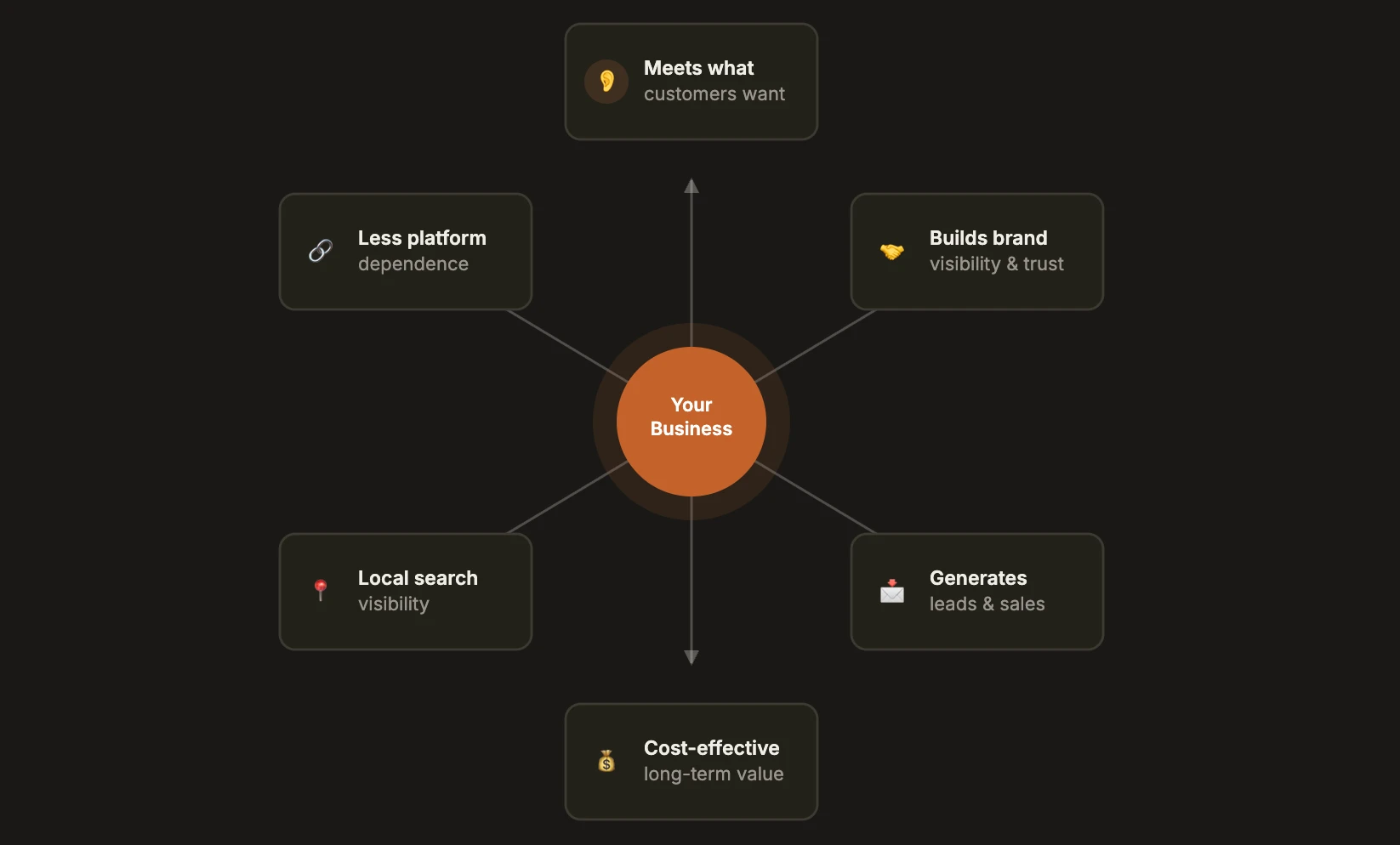
Its main benefits include:
- Meeting consumer preferences: People often search for information, advice, and product recommendations before making purchases. Helpful content gives them an opportunity to learn about their options at their own pace.
- Building brand visibility and trust: Publishing useful information consistently gives potential customers more opportunities to discover your business. When your content answers their questions, they may feel more confident contacting you.
- Generating leads and sales: Content guides potential customers from discovering a product or service to comparing options and making a purchase. A service provider, for example, could publish a pricing guide and include a link for requesting a quotation.
- Improving cost-effectiveness: Paid advertising brings visitors while a campaign is running, but useful website content continues attracting organic traffic even after publication, making it a useful long-term marketing investment.
- Supporting customer retention: Existing customers can return to your website for product instructions, maintenance advice, updates, and answers to common questions. This gives them reasons to remain engaged with your business.
- Supporting other marketing activities: An article can become a WhatsApp update, a Facebook post, an email newsletter, or a short video. Reusing content helps you maintain a presence across several channels without starting from scratch each time.
- Helping customers make informed decisions: Product comparisons, service explanations, and practical guides address common concerns before a purchase. Customers can use this information to decide if your offering suits their needs.
- Providing useful customer insights: Website visits, search queries, downloads, and inquiries can reveal which subjects interest your audience. You can use these findings to plan future content around their needs.
Content marketing does not guarantee immediate sales. Results depend on the quality of your content, the demand for your products or services, competition, and how effectively you reach your audience.
Where to Publish and Share Content
Content marketing uses three main distribution channels:
- Owned: These include your website, email list, and social media profiles. You control what you publish, although social platforms still have their own rules and restrictions.
- Earned: These include shares, recommendations, mentions, and links from other people or websites. They can introduce your business to new audiences without requiring payment for every mention.
- Paid: These include sponsored posts, search advertisements, and other paid promotions that help you reach selected audiences.
WhatsApp and Facebook are useful starting points for many small businesses in Uganda. You can share offers, answer questions, and direct interested customers to your website.
However, relying only on social media means depending on platforms whose rules and content feeds you do not control.
Your own website gives you a place to publish detailed information, organize articles, display products or services, and provide clear contact options.
WordPress is a popular option for creating a business website or blog. At Truehost, our WordPress hosting plans provide a starting point for Ugandan businesses that want to publish their own content.
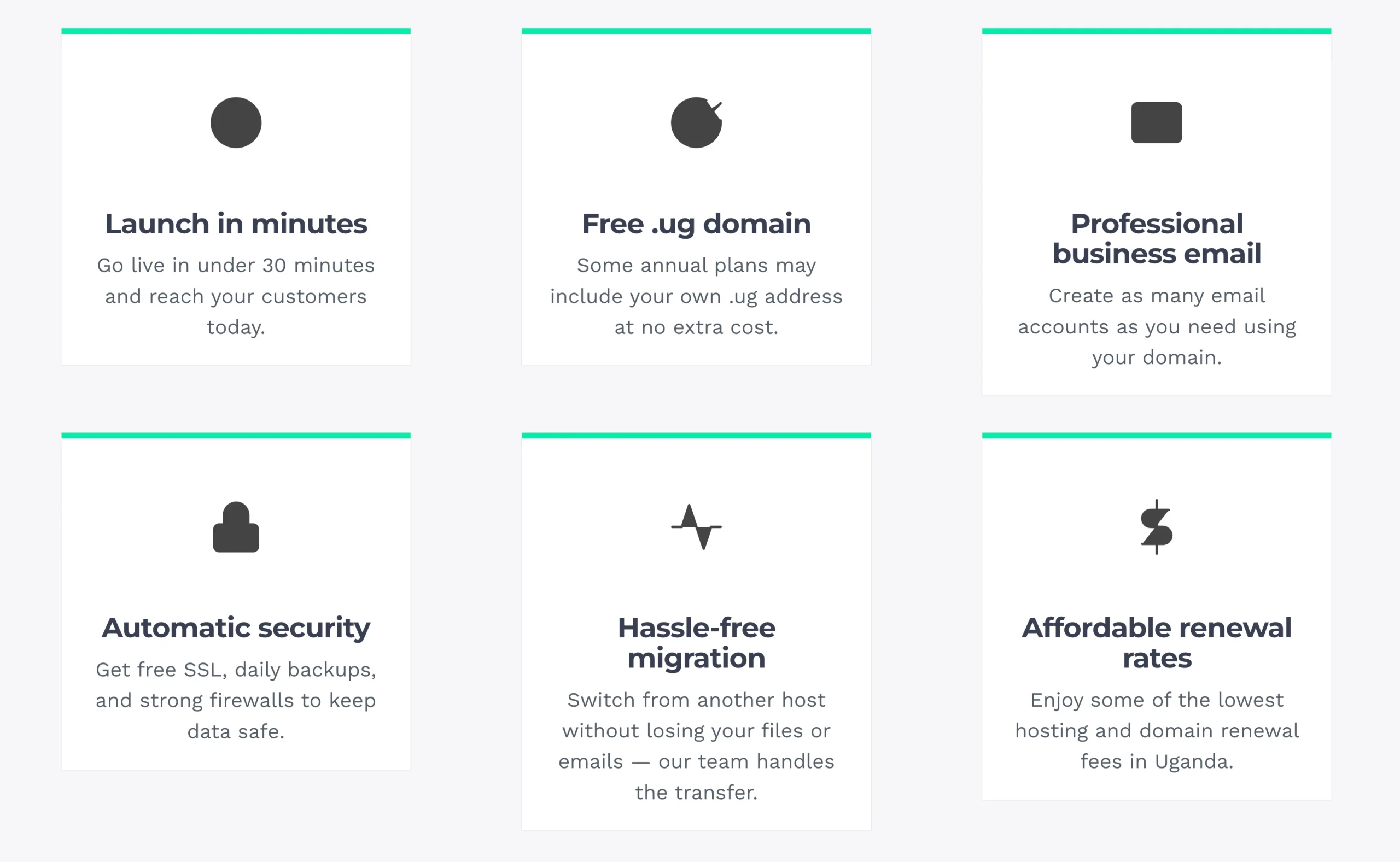
Our Starter, Pro, and Unlimited plans include cPanel, Softaculous, free SSL, daily backups, and unlimited email accounts. Starter suits new websites and blogs, while Pro is designed for small businesses and company websites.
Choose two or three channels you can maintain consistently rather than trying to publish everywhere. One useful article each week, shared through the right channels, can give you a more manageable starting point than a schedule you cannot sustain.
Factors to Consider When Developing a Content Marketing Strategy
Before creating your content calendar, consider the following factors to help you build a strategy that suits your audience and resources.
a) Mobile-first approach: Make sure your website loads quickly, displays correctly on smaller screens, and has readable text and easy-to-use menus. Compress large images and avoid layouts that make visitors struggle to find information.
b) Content personalization: Different customers may have different questions about the same product or service. Use customer feedback, inquiries, and search data to create content that addresses their needs.
A computer shop, for example, might publish separate laptop-buying guides for university students and small businesses.
c) Content accessibility: Make your content usable by people with different abilities. Add descriptive alt text to meaningful images, captions or transcripts to videos, and clear headings to your pages. Use readable text and layouts that work with assistive technologies.
d) Changing algorithms and platforms: Search engines and social media platforms change how they display content. Avoid depending entirely on one channel.
Publish important information on your website and share it through other suitable platforms to reduce your reliance on a single source of traffic.
e) Content sustainability and repurposing: Create evergreen content that remains useful over time, such as beginner’s guides, product-care instructions, and answers to common questions.
Review it when information changes, and reuse it in formats such as videos, infographics, and social media posts.
f) Consistency: Set a realistic publishing schedule and use a content calendar to plan topics and deadlines. If you can manage one useful article per week, start there. A manageable schedule makes it easier to maintain your content efforts during busy periods.
How to Measure Content Marketing Results
To find out if your content is helping your business, start with a clear goal and track the metrics that relate to it.
- Brand awareness: Monitor page views, unique visitors, time spent on relevant pages, and social shares to see if people are discovering and engaging with your content.
- Lead generation: Track email sign-ups, downloads, contact form submissions, phone calls, and WhatsApp enquiries linked to your content.
- Sales: Monitor purchases, conversion rates, and revenue associated with your website and marketing activities.
You can use Google Analytics to examine website traffic and visitor activity.
Google Search Console provides information about your website’s performance in Google Search, including the queries people use to find your pages, impressions, and clicks.
Review your results monthly. Identify the topics that attract relevant visitors, the pages that generate enquiries, and the content that leads to sales. Use these findings to improve existing pages and plan future publications.
Remember that high traffic alone does not guarantee business growth. A page that attracts fewer visitors but generates relevant enquiries may be more valuable to your business than a popular page that produces no meaningful action.
Common Content Marketing Mistakes
Most beginner slip-ups are avoidable with a bit of planning:
- Starting without a plan: Publishing random topics makes it difficult to connect your content to business goals. Define your audience, objectives, channels, publishing schedule, and measurement methods before you begin.
- Posting inconsistently: Publishing several posts in one week and then disappearing for months makes it harder to maintain an active content programme. Choose a schedule that fits your workload and follow it as consistently as possible.
- Prioritising quantity over quality: Rushed articles, inaccurate information, and repetitive posts give readers little reason to return. Focus on producing useful, well-prepared content, even if that means publishing less frequently.
- Ignoring distribution: Publishing an article does not guarantee that people will find it. Share it through relevant channels, link to it from suitable pages on your website, and include it in your newsletter when appropriate.
Start Content Marketing on Your Own Website
Start with one audience, one clear goal, and a manageable publishing schedule. Select two or three channels you can maintain consistently.
Then start creating useful content that answers your customers’ questions, share it on your website and social media, and track the results to see what works. As you learn more about your audience, you can improve existing content and plan new topics around their needs.
A WordPress website can help your content attract visitors through search and remain available long after publication.
If you want to begin content marketing on your own website, our Truehost web hosting plans support 1-click WordPress installation and content marketing features to get you started easily.
