A domain registrar is a company that lets you search for, register, renew, transfer, and manage a domain name.
Three parties are involved. You are the registrant, the person or business that holds the domain. The registrar sells and manages it for you.
The registry keeps the official record for each extension, such as .com or .ug.
Think of land. The registry is the official land registry. The registrar is the licensed agent. You are the owner.
So, what is a domain registrar worth to your business? Quite a lot. Verisign counted 401.6 million registered domain names worldwide by June 2026. Yours can be one of them.
Below, you will learn how registration works, how to pick a registrar in Uganda, and how to protect your name.
What Does A Domain Registrar Do?
Your registrar is your domain’s day-to-day manager. Here is the full job list.
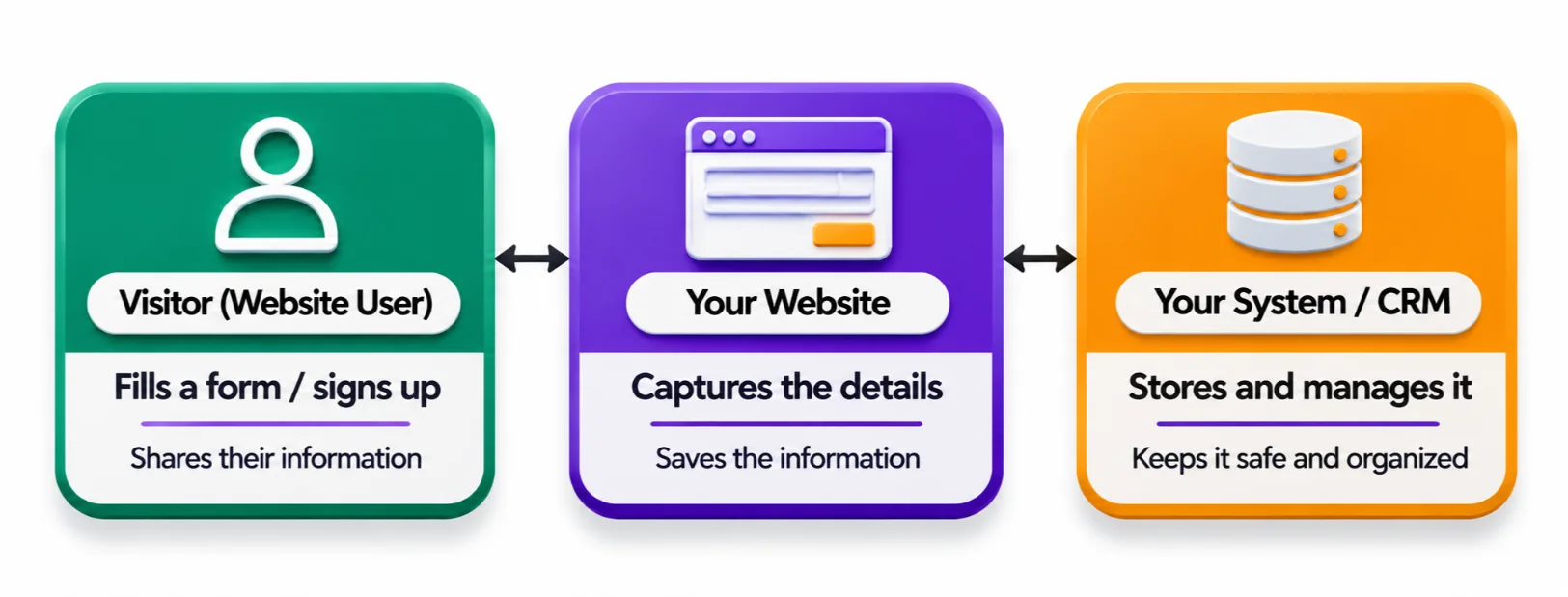
- Domain availability search. You type a name. The registrar checks if it is free.
- Registration and renewal. It records your domain for a set term. It also renews it when the term ends.
- DNS management. DNS tells browsers where your website and email live. You edit these records in your dashboard.
- WHOIS and registrant data handling. It stores your name and contact details. It also controls what the public can see.
- Domain transfers. It lets you move a domain in or out, using an authorization code.
- Domain locking and security. A lock blocks unauthorized transfers. Some registrars add two-factor login.
- Optional services. Many also sell hosting, business email, SSL, and website builders.
ICANN accreditation applies to generic extensions such as
.com. For country extensions like.ug, you follow the rules of the national registry.
So check which rules cover the extension you want.
How Domain Registration Works
Registering a domain takes minutes. The path is the same almost everywhere.
- Choose a name. Keep it short, clear, and easy to spell.
- Check availability. Use your registrar’s search box.
- Select a TLD. Pick
.com,.co.ug,.ug, or another extension. - Add registrant details. Enter your real name or business name, email, and phone.
- Pay. Complete checkout.
- Domain is registered. You receive a confirmation.
- Connect DNS or hosting. Point the domain to your website or email.
Now let’s see how this looks in Uganda.
Uganda walkthrough with Truehost
- Go to our domain search page.
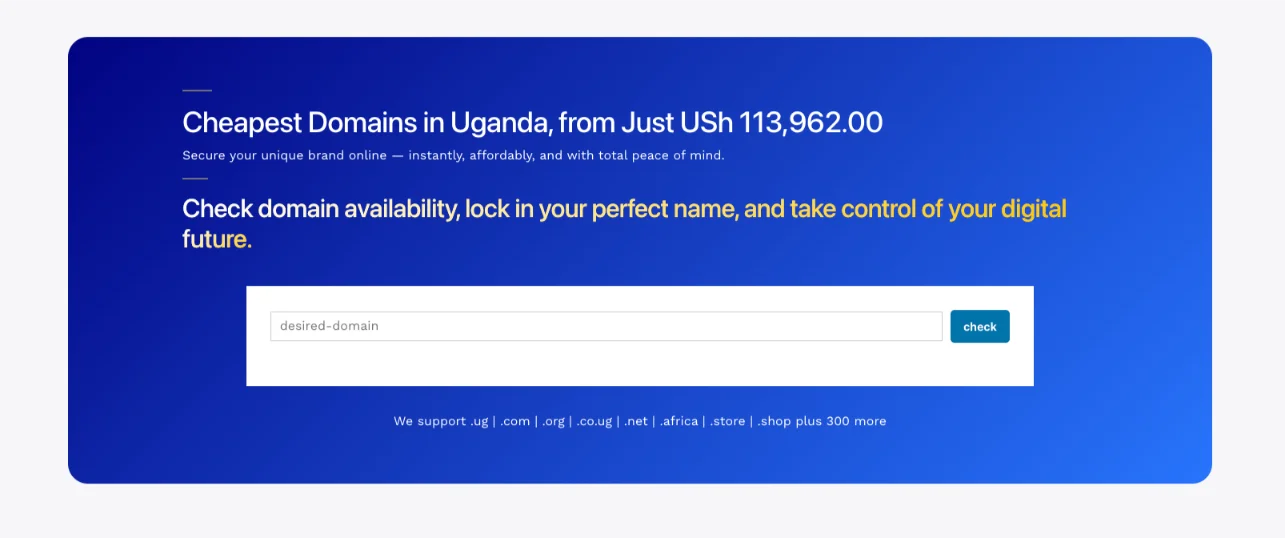
- Type your business name in the search box.
- Pick an available extension, such as
.co.ugor.com. - Add it to your cart.
- Log in or create an account.
- Check the price in UGX. Confirm VAT and fees at checkout.
- Pay with one of the options shown at checkout.
How long does it take?
Most registrations finish within minutes. Some country extensions take a little longer. One international registrar lists 0 to 2 hours for .ug.
After that, DNS changes need time to spread across the internet. This is called propagation.
Your site or email may not work everywhere at first. Give it a few hours before you start troubleshooting.
Why Ugandan businesses need a domain registrar
Uganda is getting more connected. DataReportal counted 11.6 million internet users in October 2026. That is 21.8% of the population.
Your customers are among them. A domain puts your business where they look.
- Build credibility. A professional web address looks more trustworthy than a free email or a social page.
- Protect your brand name. Once you register it, a competitor cannot take it.
- Create branded email. For example,
[email protected]. - Support local visibility. A
.co.ugaddress tells customers you serve Uganda. - Secure your online identity early. Register the name before you launch. You can build the site later.
There is one tradeoff. The cost is small, but you pay it every year.
.Ug Vs .Com: Which Domain Should A Ugandan Business Choose?
Both work well. Your goals decide which one fits.
For scale, .com is the world’s largest extension. Verisign reports 166.6 million .com registrations as of June 2026.
.com: Global recognition. Ideal for export, tech, and regional businesses..co.ug: A strong local identity for Ugandan companies..or.ug: Made for nonprofits and NGOs..ac.ug: Made for educational institutions..go.ug: For government-related entities, where applicable.
Our recommendation: secure both .com and .co.ug where your budget allows. This protects your brand from lookalike names.
Two domains mean two renewals. If money is tight, start with the one your customers will type most.
Ready to check your name? Search .ug and .com domains with us at Truehost.
How To Choose The Best Domain Registrar In Uganda
Not every registrar is equal. Use this checklist before you pay.
- Transparent pricing in UGX. Check both the registration price and the renewal price.
- Local payment methods. You should not need a foreign card.
- .ug and international extensions. One account should cover both.
- Free or affordable WHOIS privacy. It keeps your personal details out of public records.
- Easy DNS management. You should be able to update nameservers yourself.
- Strong security. Look for domain lock, two-factor authentication, and transfer protection.
- Responsive local support. You need fast help when your email stops working.
- Bundled services. Domain, hosting, email, and SSL under one roof saves time. We at Truehost also offer VPS, dedicated servers, OpenClaw hosting, AI Workers, and n8n hosting as your needs grow.
Prices differ more than you might expect. One price tracker listed a .co.ug first-year price of $41.60 at one registrar and $52.49 at another, with a $60.99 renewal.
That is why you should always check renewal costs. The cheapest first year is not always the cheapest overall.
How To Register A Domain With Truehost
Here is the process at our end. It takes a few minutes.
- Search the desired domain. Type your name into our search box.
- Choose
.ug,.co.ug,.com, or another extension. Pick what fits your goals. - Add the domain to cart. Review the price.
- Create or log in to an account. Use an email you check often.
- Enter accurate registrant information. Use your real details. Errors can cause problems later.
- Confirm your email and manage DNS from the client area. Verification keeps your domain active.
- Connect hosting or set up business email. Your domain is now ready to work.
What To Do After Registering Your Domain
A domain alone does not make a website. These steps finish the job.
- Connect it to web hosting. Point your domain to your host. Our plans cover web hosting, VPS, and dedicated servers. Running automation or AI tools? Look at our OpenClaw hosting, AI Workers, and n8n hosting.
- Install SSL. It encrypts visitor data and shows the padlock. Do it before launch.
- Set up professional email. Use an address like
[email protected]. - Configure DNS records. Add the records your host gives you. MX records, for example, route your email.
- Enable auto-renewal. This keeps your domain from lapsing by accident.
- Enable domain lock and account security. Add a strong password and two-factor login.
- Build the website. Start simple. You can improve it later.
How To Protect Your Domain
Your domain is a business asset. Protect it like one.
- Use a strong password and 2FA. If someone enters your account, they can change your settings.
- Keep registrant contact details current. Renewal notices go to the email on file.
- Enable domain lock. It blocks transfers you did not approve.
- Turn on auto-renewal. One missed payment should not cost you your name.
- Be cautious with transfer authorization codes. Share them only with the registrar you chose.
- Renew before expiry. This avoids downtime or losing the domain.
One more point. Under ICANN policy, many registrars apply a 60-day transfer lock after a new registration or a change of registrant details. Plan any transfer around it.
Common Mistakes When Registering A Domain
Most problems are easy to avoid. Watch for these.
- Choosing a name that is hard to spell or say. If you must spell it out on the phone, rethink it.
- Using hyphens or numbers unnecessarily. Customers forget them.
- Ignoring renewal costs. Check the second-year price, not just the first.
- Letting the domain expire. Your website and email can go down together.
- Registering under the wrong person or organization. Use the business as the registrant, not a freelancer or friend.
- Buying a domain without checking social-media handles. Matching names help customers find you.
What Is a Domain Registrar FAQs
Is a domain registrar the same as a web host?
No. A registrar stores and manages your domain name. A web host stores your website files and serves them to visitors. Many companies, including Truehost, offer both services, but you can buy them separately.
Can I buy a .ug domain from Truehost?
Yes. Truehost offers .ug domains and related extensions such as .co.ug, .com.ug, .or.ug, and .org.ug. The .ug price is 29.99 USD for the first year, with renewal at USh 114,000.00. Confirm the live price, VAT, and payment fees at checkout.
How much does a domain cost in Uganda?
It depends on the extension and registrar. Truehost lists .ug at 29.99 USD to register and USh 114,000.00 to renew. The official UG Registry’s direct .ug rate has been listed at UGX 95,000 per year, VAT inclusive.
Can I transfer my domain to Truehost?
Yes, if the domain is eligible. You generally need to unlock it at your current registrar and get the EPP or authorization code. Then submit the code to Truehost and approve the transfer email. Transfers commonly take 3–7 days.
Do I own my domain forever?
No. You register, or lease, the exclusive right to use a domain for a fixed term, typically 1–10 years. You keep it only by renewing before it expires.
What happens if my domain expires?
After expiry, the domain usually enters a grace or redemption period. You may still renew it then, often with extra fees. If you do not renew, it can be released and registered by someone else. That may affect your website, email, and brand.
What is WHOIS privacy?
WHOIS privacy hides your personal registrant details from the public WHOIS database. These include your name, email, phone number, and address. It helps reduce spam and unwanted exposure. Availability and handling vary by extension and registrar.
How long does domain registration take?
Registration is usually almost instant once your name is available and payment is confirmed. You can normally manage DNS, renewals, and other settings from your registrar dashboard right away.
Can I register a domain without a website?
Yes. You can register and hold a domain without hosting. Later, you can connect it to a website, use it for professional email, forward it elsewhere, or simply reserve the name.
Get Your Domain With Truehost
Still asking what is a domain registrar? It is the starting point for a secure, professional online presence.
Your registrar holds your name, your DNS, and your renewals. Choose one with clear pricing, strong security, and real support.
Secure your name before someone else does.
Register your .ug or .com domain with Truehost, pay in UGX, manage DNS easily, and get local support.
