Have you ever wondered whether a domain name could be worth millions of shillings? Domain names are more than website addresses. Some become digital assets that Ugandan businesses and international buyers will pay real money for.
Domain investing is the practice of buying domain names at a low price and holding or reselling them for a profit. Investors look for names with strong keywords, short length, memorable phrasing, or branding potential. They may register available names through a domain search tool, buy existing domains from other owners, or pick up expired domains that could attract buyers later.
It is not a guaranteed way to make money. Some domains sell quickly, others take years, and some never sell. You also pay registration fees, yearly renewals, marketplace commissions, and sometimes legal costs if a name conflicts with a trademark.
This article covers the essential steps, costs, strategies, and risks involved in getting started with domain investing, even with a limited budget.
How to Start Domain Investing Step by Step

Step 1: Learn the Basics of Domain Names
A domain name is the address people type to reach a website, such as example.co.ug. It has a name (example) and an extension (.co.ug). Registrars are accredited companies, such as Truehost Uganda, that register domains and keep the ownership records.
When you register a name, you don’t buy it outright. You get the right to use it for a set period and must renew it to keep it. If you miss the renewal, the domain expires and eventually becomes available to others.
Registering an available name means paying a standard fee. Buying an already-registered domain means negotiating with the owner or bidding against others, so the price comes from the market. Each domain also has a registrant, an expiry date, and a registrar, and it can be transferred to another registrar or moved between accounts. A name is often the first thing customers see of a business, which is why some domains carry real value.
Step 2: Choose a Domain Investing Strategy
Pick a focus before you buy anything. A focused strategy makes it easier to compare opportunities and avoid acquiring names without a clear reason.
- Brandable domains are distinctive names suited to a company or product. Their value depends on whether a founder likes that exact name, so many sit unsold.
- Keyword-rich domains describe a product, service, or industry, such as a service paired with a category. Resale appeal can be narrow, and competitive keywords cost more.
- Short domains are easy to remember and type. Good ones are mostly taken, and a short string of random characters may attract no interest.
- Geographic domains relate to cities, countries, or regions, such as names built around Kampala, Entebbe, Jinja, or Uganda itself. Demand follows the strength of the local market.
- Expired domains lapsed when a previous owner stopped renewing. Some have useful backlinks, while others carry spam history.
- Existing domains are already owned and listed by others. You see the price up front but usually pay well above registration cost.
No category guarantees a profit. Beginners often do better by learning one or two well.
Step 3: Research Profitable Domain Niches
Many Ugandan businesses need online identities, especially in agriculture, tourism, fintech, education, real estate, healthcare, and logistics. These sectors also attract other investors, so competition for good names exists.
Start with keyword research tools, which show how often people search for certain terms. Then check business directories to see how many companies work in a field and how they name themselves. If companies in a sector often combine a descriptive word with a common suffix, look for names that follow that pattern.
Be careful with trends. A buzzword popular this month may be forgotten next year. Look for signs of real buyer interest, such as new company launches, startup activity, or a steady flow of new businesses. A simple test: can you name a likely buyer and say why they’d want the name? If not, you are guessing.
Step 4: Identify Valuable Domain Names
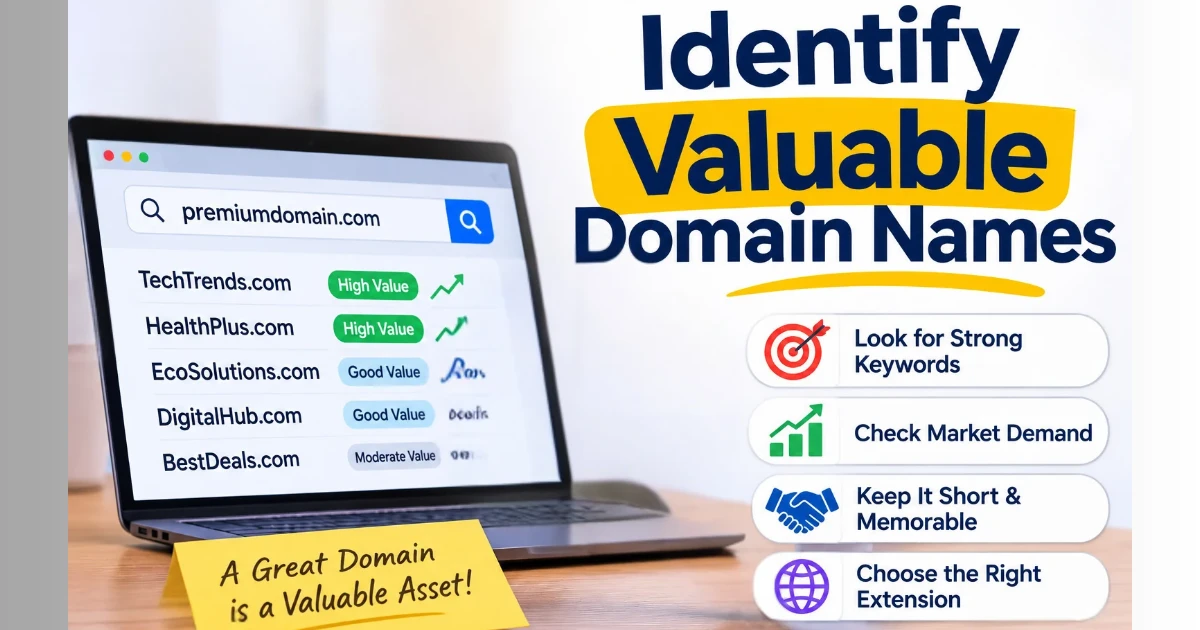
A domain’s value depends on how well it fits what a buyer needs. Experienced investors look at these factors:
- Memorability: Easy to remember, pronounce, and share.
- Brandability: Could work as a business, product, or service brand.
- Commercial relevance: Connected to markets where buyers operate and have budgets.
- Clarity: Simple spelling and little ambiguity.
- Keyword relevance: Descriptive terms that show what a business does.
- Domain extension: An extension suited to the audience and market.
- Buyer demand: Evidence that someone may have a reason to acquire the name.
Say you’re looking at a name that pairs a farming term with a short action word. Check the spelling, ask whether it sounds like a plausible company name, and see whether agribusinesses or agritech startups might use it. If it passes, research it further. No single trait guarantees a sale.
Step 5: Check Domain Availability and Ownership
Registrar search tools show whether a name can be registered and at what price. If it’s taken, a WHOIS lookup or a registration data service such as ICANN Lookup can show the registrar, creation date, and expiry date. Some owners use domain privacy services that hide contact details, so ownership information isn’t always visible.
Check marketplaces to see whether the name is already for sale. Then look at its history. Archived copies of past websites show what it was used for. A name that hosted a legitimate business is more appealing than one tied to spam. Watch for misleading traffic claims and odd redirects.
Run a quick trademark check as well. A name that closely resembles an established brand is a legal risk, however good it looks.
Step 6: Choose the Right Domain Extension
.com is the most widely recognised extension, and many businesses default to it. Other generic extensions, such as .net and .org, are also well known, though buyers may see them as second choices.
Country-code extensions serve national markets. For Uganda, that means .ug and second-level options such as .co.ug, which Ugandan companies often use to signal a local presence. The .ug registry is overseen by the Uganda Communications Commission, and registration is handled through accredited providers. See Truehost’s domain registration page for current options. Eligibility, pricing, and renewal terms differ between extensions, so confirm them before buying.
Buyer familiarity varies by extension. A name that works well as a .com may be worth much less in a little-known extension, while a strong local name may suit .co.ug better than a generic one. Judge the whole domain name, and don’t assume any extension guarantees a higher resale value.
Step 7: Find Domains to Invest In
You can source domains in several ways:
- Registrar search tools show names available at standard prices, though valuable names are rarely left open.
- Aftermarket marketplaces let owners list names for sale.
- Auction platforms let buyers compete for names.
- Expired-domain services offer names that have gone through expiration.
- Direct purchases mean contacting an owner and negotiating.
Platforms such as Afternic, Sedo, Atom, and GoDaddy Auctions offer different options. Fees, eligibility, and procedures vary, so read each one’s current terms before committing money. Use comparable sales to judge the market. An asking price is only what an owner hopes to get, not proof that a buyer will pay it.
Step 8: Evaluate a Domain Before Buying It
Work through these checks before you spend:
- Name quality: Spelling, pronunciation, length, and branding potential.
- Comparable sales: Automated appraisal tools give a rough reference, but they are estimates, not guarantees of market value.
- Potential buyers: The kinds of businesses that might want the name.
- Trademark checks: Search the WIPO Global Brand Database and the records held by the Uganda Registration Services Bureau (URSB). A conflict is a strong reason to walk away.
- History: Past content, backlinks, and spam signals.
- Total costs: Purchase price, renewals, and marketplace fees.
- Maximum price: A ceiling based on your budget and the evidence.
Here is a hypothetical holding-cost example. You buy a name for UGX 150,000, which covers the first year, and it renews at UGX 60,000 a year. After five years you have paid four renewals, so you have spent UGX 390,000 before any commission. You must sell above that to break even.
Step 9: Register or Purchase Your First Domain
Choose a reputable registrar or marketplace with clear pricing and transfer policies. Before paying, check:
- Total cost: Registration, auction, and transaction fees, and any currency conversion if you pay in US dollars.
- Payment method: Confirm which options your registrar accepts, such as cards or mobile money, and keep the receipt.
- Renewal pricing: First-year promotions are common, and renewals can cost much more.
- Account security: A strong, unique password and two-factor authentication where available.
- Domain locking: A domain lock helps block unauthorised transfers.
- Contact details: Keep your registrant email current, since renewal notices go there.
After purchase, confirm the domain sits in an account you control and that you’re listed as the registrant. For a first purchase, many beginners register one well-researched name at a modest price so little is at risk.
Step 10: Decide Whether to Hold or Sell the Domain
Weigh current buyer interest, comparable sales, and how your asking price compares with realistic demand. Each year adds a renewal fee, which raises the price you need to break even. Fixed-price listings, offers, and negotiation suit different names.
Review your portfolio regularly. Waiting for a suitable buyer is a strategy. Holding a domain with no clear reason is just a recurring expense. If you can’t explain why a name should sell, letting it expire may cost less than years of renewals.
Step 11: List Your Domain for Sale
Most marketplaces ask for account verification or ownership checks, so review the requirements first. You can choose a fixed price, a make-offer listing, or an auction. Make-offer listings help when you’re unsure of the right price, and auctions suit names with uncertain value.
Base your asking price on the domain’s traits and market evidence, not on what you hope to earn. A for-sale landing page with a clear contact or purchase option helps buyers reach you, and local buyers often prefer a phone number or WhatsApp contact alongside email. Check commissions, payment procedures, and transfer arrangements in advance, since they affect what you actually receive. Describe the domain accurately, and avoid unsupported claims about value or traffic.
Step 12: Find Potential Buyers and Negotiate a Sale
Listings work passively, but direct outreach can help. Find Ugandan businesses, startups, and organisations whose products or brand match the name. A company with a long or forgettable address may see an upgrade as worth paying for.
Keep your message professional, specific, and short. Avoid spam and pressure tactics. Never suggest that a company must buy a name to protect its trademark, because that bad-faith approach can bring serious legal trouble.
Compare offers with your total investment and likely demand. Set a minimum acceptable price before negotiating, and expect buyers to counter below your ask. Keep written records of offers and agreed terms, including the currency the price is quoted in.
Step 13: Complete the Sale Securely
Many scams happen at the closing stage. Reputable marketplaces and escrow providers can hold funds until the domain is delivered. Confirm payment has cleared before you release the name, and be wary of overpayments, fake payment screenshots, or buyers who want to skip safeguards. With mobile money or bank transfers, check that the funds have reached your account instead of relying on a message from the buyer.
Know the three ways a domain can change hands:
- Changing registrant details updates the legal owner on the record without changing the registrar.
- Transferring between registrars moves management to another registrar, usually with an authorisation code. Read your registrar’s domain transfer rules, since restrictions such as waiting periods may apply.
- Moving between accounts shifts the domain from one user account to another, often at the same registrar.
Afterward, confirm the buyer has control and record the sale, fees, and final proceeds. Keep these records in case you need them for tax reporting.
Where Can You Buy and Sell Domain Names?
1) Domain Marketplaces
Afternic, Sedo, Atom, and other established marketplaces connect owners with buyers. Features, commissions, listing requirements, and payment arrangements differ, so compare current terms first.
2) Domain Registrars
Registrars provide registration and management services. Some also offer aftermarket listings, so you can manage domains and look for buyers in one place. Pricing, renewal rates, and security features vary.
3) Domain Auction Platforms
Auctions let buyers compete through bidding. Reserve prices, deadlines, buyer fees, and payment requirements vary, so read the terms first. Set a maximum bid in advance.
4) Direct Sales
Direct sales happen between an owner and a buyer. They allow flexible pricing, but secure payment, a clear agreement, and a reliable transfer process still matter. Escrow can protect both sides.
Common Domain Investing Mistakes to Avoid
1) Buying Domains Without Research Beginners often buy a name because it sounds good. Research buyers, comparable sales, history, and trademarks before you spend.
2) Registering Too Many Domains Low registration prices tempt new investors into building a big portfolio fast, but every name adds a renewal cost. Start small and expand once you see what works.
3) Ignoring Renewal Costs Introductory prices can hide higher renewal rates. Work out total holding costs before buying and track every renewal date.
4) Overestimating a Domain’s Value Owners get attached to their names, and appraisal tools can produce flattering numbers. A domain is worth what a real buyer will pay, so price against comparable sales.
5) Ignoring Trademark Issues A name resembling an established brand can lead to disputes, forced transfers, or financial loss. Search trademark databases first, and avoid names that target well-known brands or mislead buyers.
6) Expecting Quick Profits Stories of fast, large sales are not typical. Budget for several years of renewals and treat any quick sale as a bonus.
7) Using Unsafe Transaction Methods Sellers in a hurry sometimes skip escrow or accept unusual payment arrangements, and scammers count on that. Use reputable services, confirm payment, and keep records.
8) Following Every Trend Buzzwords set off waves of registrations, and many fade quickly. Look for lasting commercial demand instead.
FAQs
Is Domain Investing Profitable?
It can be, but there is no guarantee. Some investors earn money from carefully chosen names, while many domains never sell or sell for less than their total costs. Results depend on market demand, your investment choices, pricing, and ongoing costs such as renewals and commissions.
How Much Money Do You Need to Start Domain Investing?
There is no fixed amount. You can begin by registering a few well-researched names at standard fees, while aftermarket names can cost much more. Build renewals and marketplace fees into your plan, and keep spending low until you see how the market responds.
Can I Start Domain Investing With $10?
In some cases you can register a domain for about that amount, depending on the extension and registrar, though renewals may cost more and exchange rates affect the cost in shillings. It works as practice, but one name rarely produces a meaningful return.
Do I Need a Website to Invest in Domains?
No. Many investors hold names without a site, and a marketplace listing is usually enough. A simple for-sale landing page helps buyers contact you but isn’t required.
Which Domain Extension Is Best for Investing?
No single extension is best. .com has the widest recognition, and country-code extensions such as .ug can do well when they fit a Ugandan audience. Judge the whole name and its likely buyers.
Should I Buy Expired Domains for Investment?
They can be worth buying, but they need extra checking. An expired domain may have useful backlinks or brand appeal, but it may also carry spam history. Review its archived content, registration history, and trademark status first.
How Long Does It Take to Make Money From Domain Investing?
It varies widely. A name might sell within months, take several years, or never sell. Results depend on the domain, its price, market demand, and how actively you promote it. Renewal costs keep running while you wait.
Ready to Start Domain Investing With a Clear Strategy?
Domain investing offers a chance to earn money by buying and selling names that businesses and other buyers find useful. Results depend on careful research, realistic pricing, controlled spending, and the ability to find suitable buyers.
A sensible starting point is a small portfolio built around a clear strategy. Research demand, check each domain’s history, work out the full cost of ownership, and use secure buying and selling processes. Treat every domain as a risky investment, rely on evidence, and accept that not every name will sell at a profit.
Ready to take the first step? Search for an available domain with Truehost Uganda today and shortlist two or three names that fit your strategy.
