Domain escrow is what stops you from wiring money to a stranger for a domain you may never receive.
It protects both parties during a domain sale by having a neutral third party hold the buyer’s payment until the seller transfers the domain successfully.
Without it, one of you has to trust the other first. The buyer pays and hopes. Or the seller hands over the domain and hopes. In Uganda there is an extra wrinkle, because the best-known escrow service has restrictions on payments to and from the country.
All-in-all, escrow ensures both parties meet their agreed obligations first.
Below, we cover the five steps, what changes for you in Uganda, how the domain itself moves, and what it costs.
How Domain Escrow Works
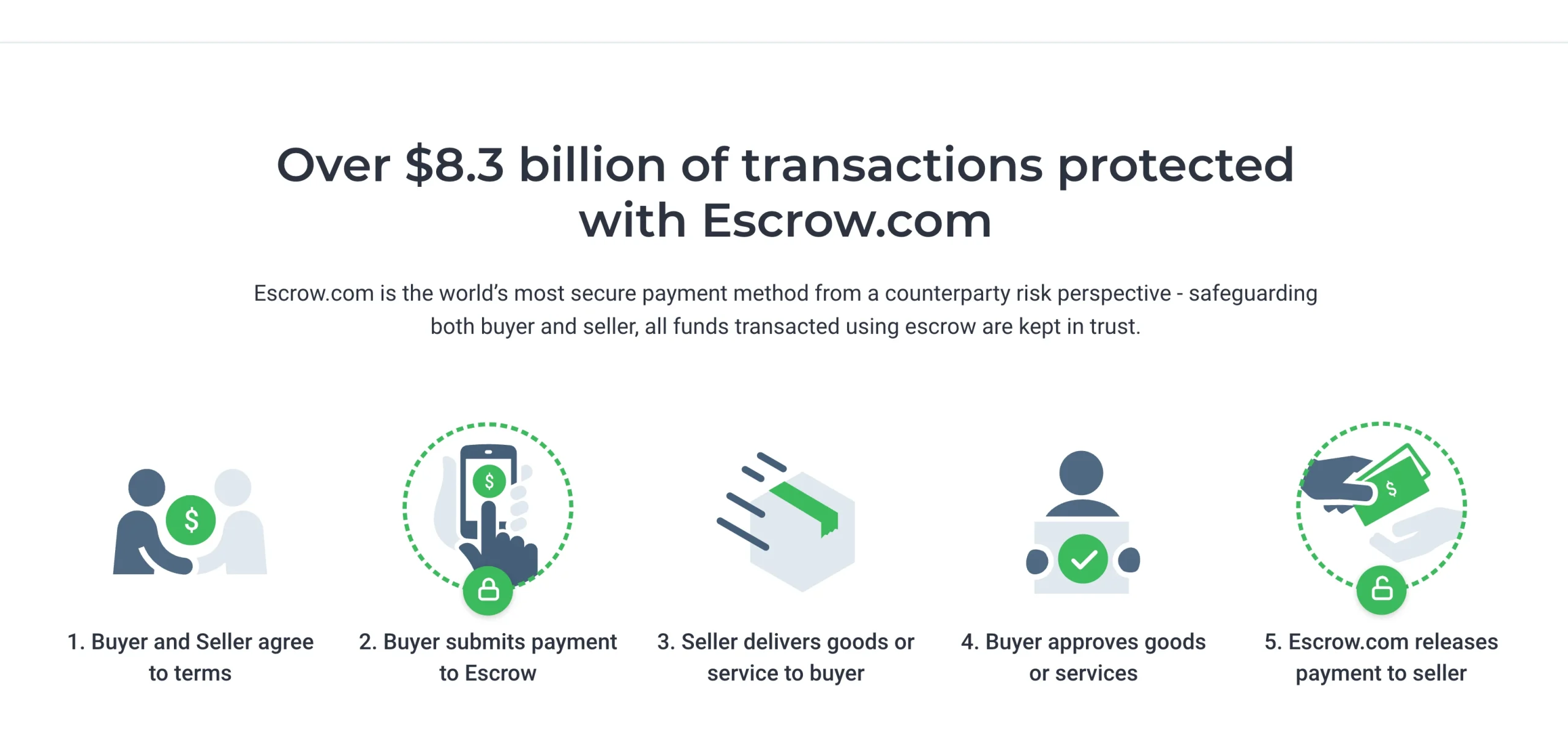
Most domain escrow transactions follow five steps. Let’s use Escrow.com’s published process as an example.
- Agree on the terms: The buyer and seller agree on the domain name, sale price, escrow fees, transfer deadline, and inspection period. Both parties then register with the escrow service and approve the transaction terms.
- Buyer makes payment: The buyer sends the money to the escrow service instead of paying the seller directly. The service confirms that the funds have cleared before notifying the seller to proceed.
- Seller transfers the domain: The seller unlocks the domain and transfers it to the buyer’s registrar account. Escrow.com also offers a domain concierge service to assist with the transfer.
- Buyer inspects the domain: The buyer confirms ownership and checks that the domain matches the agreement. Once satisfied, they accept the transaction.
- Seller receives payment: The escrow service releases the funds after verifying the transfer or when the agreed inspection period ends, depending on the transaction terms.
Escrow.com contacts the seller before payment to help verify that they own the domain. This gives the buyer an additional layer of protection before sending money.
What Changes When You Are in Uganda?
If you are buying or selling a domain in Uganda, you need to check the escrow provider’s payment restrictions before starting a transaction.
Escrow.com lists Uganda among the countries and regions it does not accept payments from or send payments to.
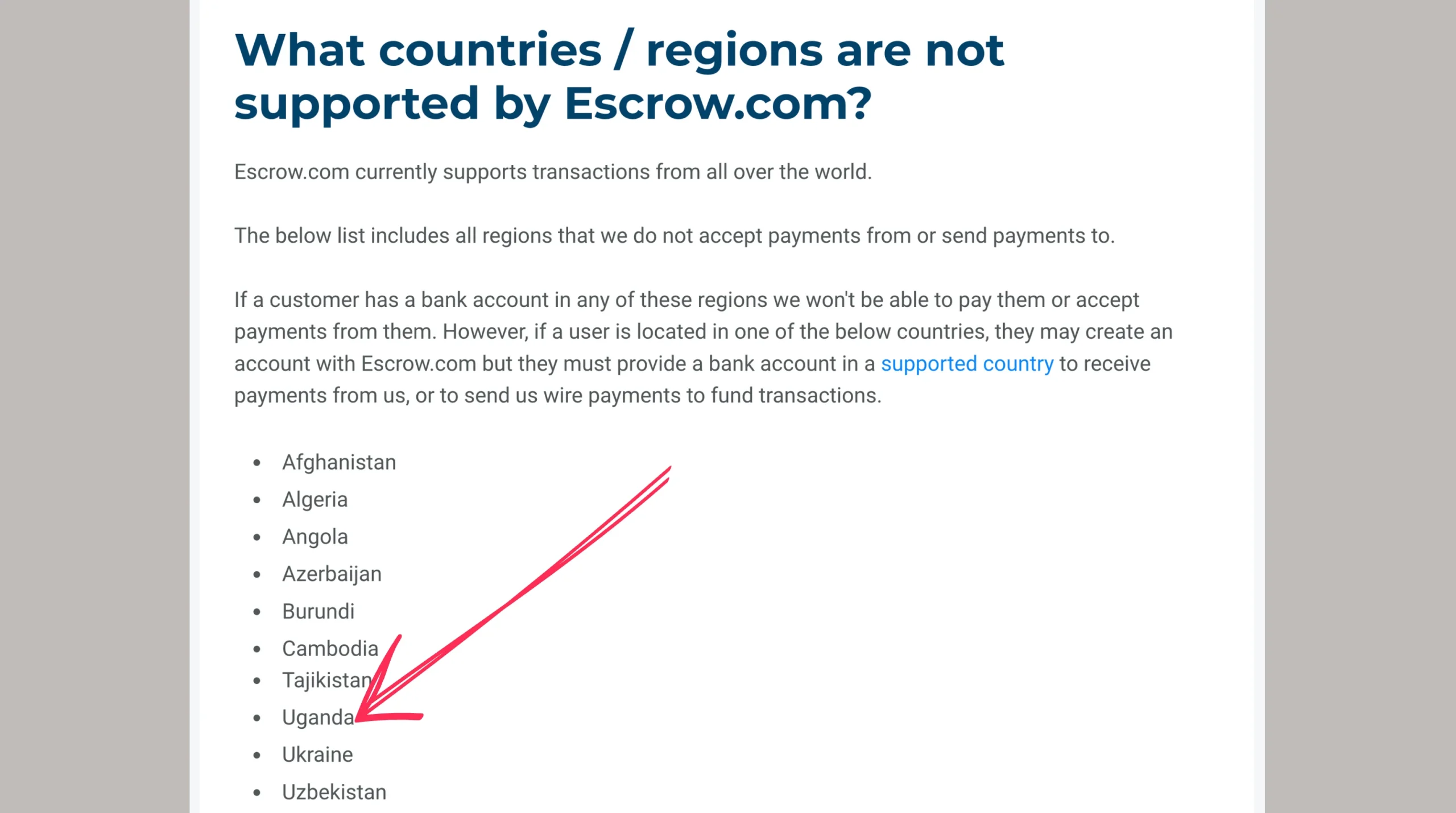
You can still create an account, but you need a bank account in a supported country to send or receive wire payments.
If you are the buyer:
Escrow.comlists bank wire, PayPal, and card payments as accepted payment options.- Wire transfers are accepted in USD, AUD, EUR, GBP, and CAD.
- International wire payments attract an additional $25 charge, excluding your bank’s fees.
- The sender’s name must match the name registered on the
Escrow.comaccount. - Confirm with Escrow.com support if card payments from Uganda are accepted.
If you are the seller:
- Payouts are made to bank accounts registered in the seller’s own name.
- PayPal, Wise, and Payoneer are not supported payout methods.
- International wire payouts typically take one to five business days.
The payment restrictions can affect your ability to complete a transaction, even if you can create an account. Check the requirements before agreeing to use the service. If either party cannot meet them, discuss alternative arrangements before proceeding.
How the Domain Changes Hands
There are two main ways to transfer a domain, depending on if the buyer and seller use the same registrar.
- Internal account push: The seller moves the domain from their account to the buyer’s account within the same registrar. This process can take a few hours.
- Transfer between registrars: The seller unlocks the domain and provides its EPP (authorization) code. The buyer then initiates the transfer through their registrar. This process can take up to 10 days.
If you are transferring a domain to Truehost, follow these steps:
- Unlock the domain at your current registrar.
- Obtain the EPP authorization code.
- Initiate the transfer through our platform.
- Confirm the transfer through the verification email.
Transfers to Truehost normally take five to seven days and include a free one-year extension.
Ownership changes for .ug and .co.ug domains may involve manual procedures, supporting documents, and additional fees. Requirements can vary by registrar, so confirm the process before agreeing on a transfer deadline.
What Domain Escrow Costs and Who Pays?
Escrow fees usually depend on the transaction value and the provider’s pricing structure.
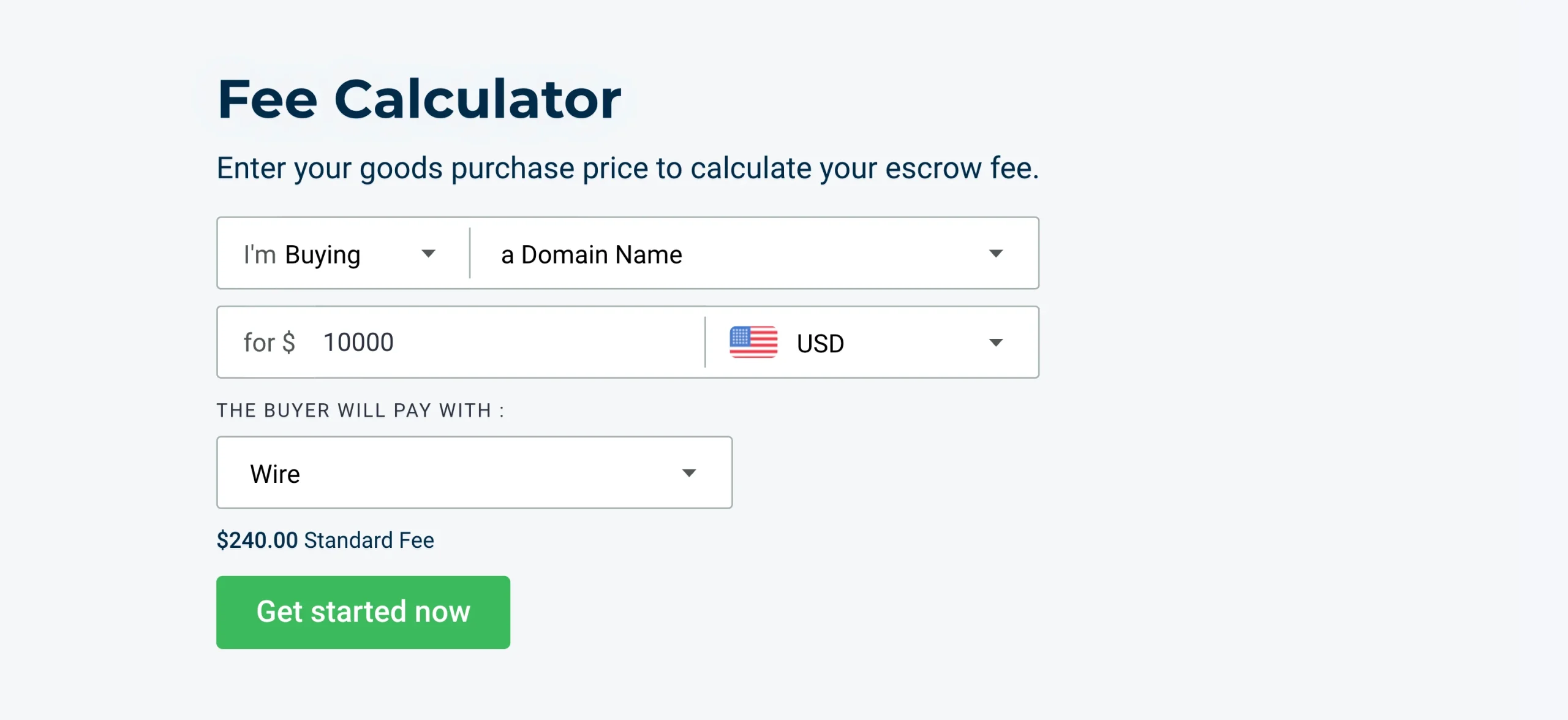
Using Escrow.com as an example, these are the main costs to consider:
- Escrow service fee: Escrow.com changed its domain transaction fee structure in May 2024. Use its fee calculator for the current figure on your deal.
- International wire fee: International wire payments attract an additional $25 charge.
- Bank charges: Your bank may apply additional international transfer fees, which are the customer’s responsibility.
- Refund policy: Escrow fees may become non-refundable once Escrow.com has processed the payment and approved the transaction.
The buyer and seller can agree to split the escrow fee or have one party cover the full amount. Discuss this before starting the transaction and put the agreement in writing to avoid disagreements later.
Other Ways to Secure a Domain Sale
If Escrow.com is unavailable or its payment restrictions make it difficult to use from Uganda, you can consider other arrangements.
- Domain marketplaces: Platforms such as Sedo and Afternic offer transaction services that can help buyers and sellers handle domain payments and transfers.
- Lawyer-held escrow: A lawyer can prepare a sale agreement and hold the buyer’s funds until the seller completes the domain transfer. The agreement should specify the payment conditions and what happens if either party fails to meet their obligations.
Before choosing an alternative, confirm that the service accepts customers in Uganda and supports your preferred payment and withdrawal methods.
How to Spot a Fake Escrow Site
Fake escrow websites can impersonate legitimate services to steal money or domains. Protect yourself by:
- Visit the provider’s official website directly. Type its address into your browser instead of following links sent by the seller. Check the spelling carefully to avoid impersonation websites.
- Verify domain ownership. Use a WHOIS lookup or another reliable verification method to confirm that the seller controls the domain being offered.
- Keep communication within the escrow platform. Use the provider’s official communication channels and keep records of the agreed terms and transaction details.
- Avoid payments or transfers outside the agreement. Never send money directly to the seller or transfer the domain outside the agreed escrow process, even if they claim there is a problem.
Check the provider’s fraud prevention guidelines before committing to a transaction.
Register Your Next Domain with Truehost Uganda
Domain escrow makes buying and selling domains safer by protecting the buyer’s payment and the seller’s asset until the agreed conditions are met.
Before starting a transaction, verify the escrow provider’s country restrictions, agree on the fees, and allow enough time for the domain transfer.
If you are looking to secure a new domain rather than purchase one from another owner, Truehost makes it easy to search for and register your preferred domain name.
We support extensions such as .ug, .co.ug, and .com, with payment options including mobile money, bank transfer, and cards.
So, you can go ahead and search for your domain and register it with us right away.
