Domain leasing involves paying a domain owner, usually monthly, for the right to use their domain name. You can connect it to your website and email, but ownership remains with the original owner.
It allows you to use a domain name while paying for it over time instead of paying the initial full asking price.
For example, you may find the perfect domain for your business in Uganda, but the owner is asking for more money than you can afford upfront. Rather than losing the name, you could lease it and spread the cost over several months or years.
However, paying in installments can increase the total price by up to 30%, depending on the payment period.
You also need to consider who controls the domain, what happens if you miss a payment, and when ownership transfers to you.
Let’s look at how domain leasing works, what it costs, and what to check before leasing a .co.ug or .ug domain.
Types of Domain Leasing
There are three common ways to lease a domain, depending on if you want to rent it temporarily or eventually own it.
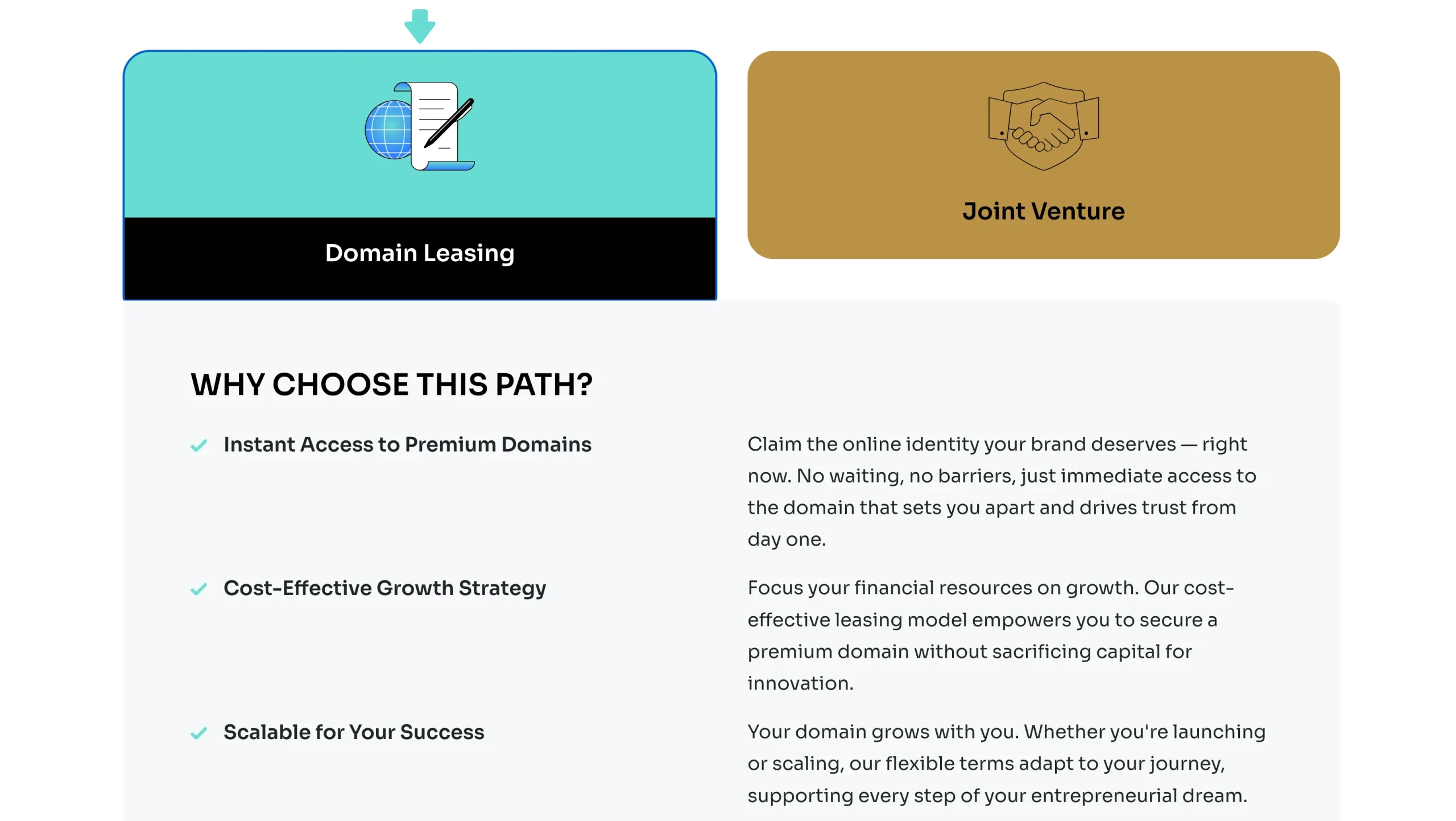
- Pure lease (rental): You pay the owner for permission to use the domain for an agreed period. The owner retains full ownership, and you return the domain when the lease ends unless you renew the agreement. This arrangement can work for temporary campaigns, events, or short-term projects.
- Lease-to-own: You make regular installment payments towards the domain’s purchase price. The seller or platform retains ownership until you complete the payments, after which the domain is transferred to you.
- Lease with a purchase option: You rent the domain but have the option to buy it later at a price agreed upon when signing the contract. You can also choose not to purchase it when the lease ends.
Lease-to-own is by far the most common on major domain marketplaces. It allows buyers to secure premium domain names without paying the full asking price immediately.
How Does Domain Leasing Work?
Although the process varies between marketplaces and private agreements, most domain leases follow these steps:
1. Agree on the terms: You and the domain owner agree on the purchase price, lease duration, monthly installments, and any additional fees. Make sure you also discuss ownership transfer conditions and what happens if you miss a payment.
2. Make the first payment: Once the initial payment is received, the marketplace or owner arranges access to the domain under the agreed conditions.
3. Configure the domain: You can update its DNS settings to connect it to your website and email services. However, your ability to change other domain settings may be restricted.
4. Continue making payments: You must pay the agreed installments on time throughout the lease. Missing payments can lead to termination of the agreement and loss of the domain.
5. Complete the purchase: With lease-to-own, ownership transfers to you after the final payment and completion of the required transfer process.
Who Controls the Domain During the Lease?
The original owner or marketplace retains ownership until the purchase is complete.
Your access depends on the agreement.
Some platforms allow buyers to manage DNS settings during the payment period, but they cannot transfer or sell the domain before completing the installments. Others keep leased domains locked until all payments have been made.
Some agreements use escrow services such as Escrow.com to hold the domain while the buyer makes scheduled payments. The service follows agreed conditions for holding and releasing the domain.
This means you can use the domain for your website and email, but you may not have full control over it until the purchase is complete.
What Happens If You Stop Paying?
The consequences depend on the marketplace or the terms of your private agreement.
For example, under some lease-to-own terms, you can cancel the arrangement, but you forfeit the payments already made. The domain then returns to the seller, and the cancelled agreement cannot be reinstated.
Other platforms may have different default and cancellation policies.
Before signing, check what happens if you miss an installment, need to cancel the agreement or can no longer afford the remaining payments. This helps you avoid losing both the domain and the money you’ve already paid.
How Much Does Domain Leasing Cost Compared to Buying?
Domain leasing generally costs more than purchasing a domain outright.
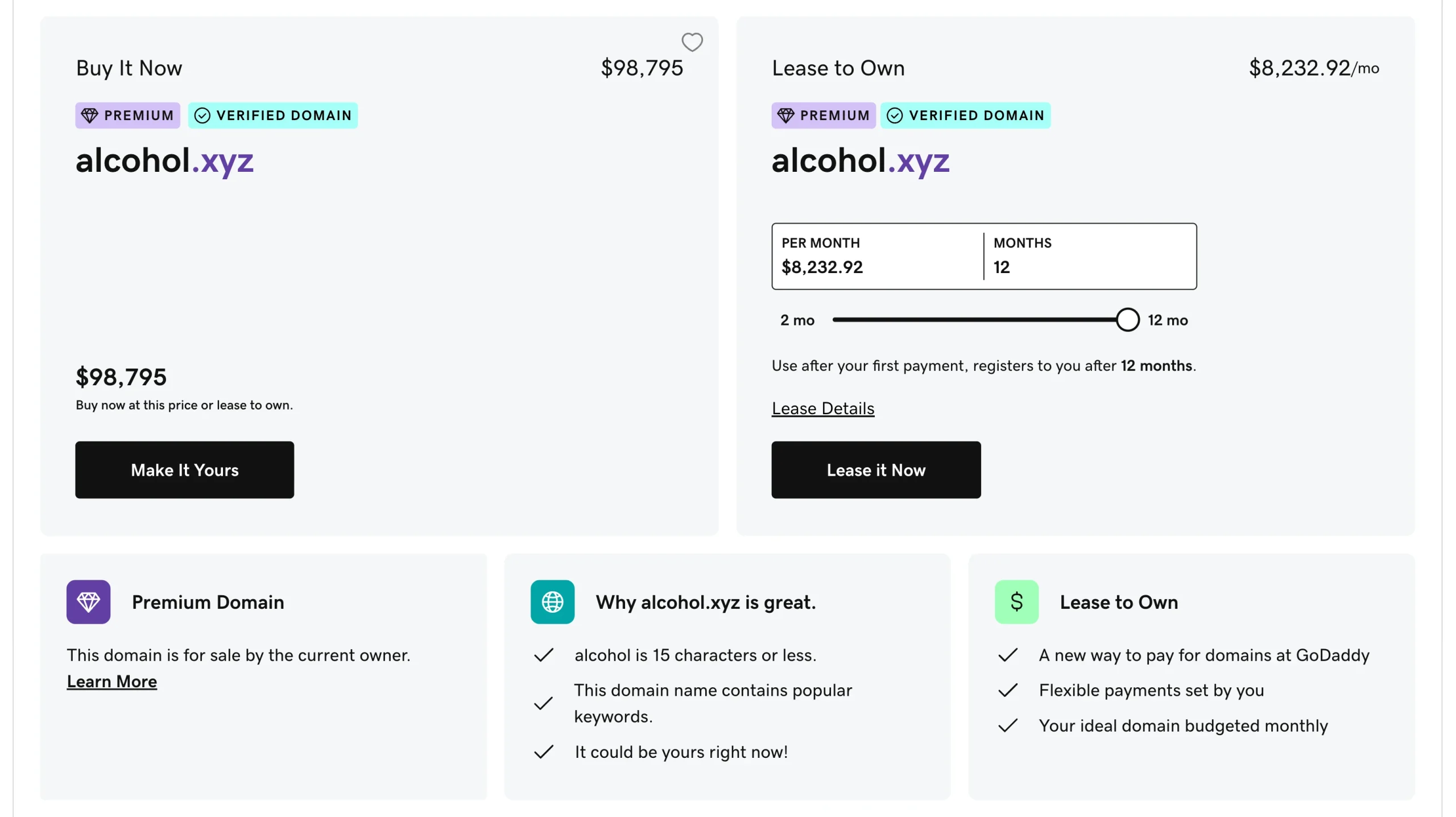
Some platforms apply additional service fees based on the payment period:
| Payment period | Additional service fee |
|---|---|
| 2–12 months | 0% |
| 13–24 months | 10% |
| 25–36 months | 20% |
| 37–60 months | 30% |
Here’s what these fees mean if you’re leasing a domain with an asking price of $10,000:
- 12 months: $10,000 in total, or approximately $833 per month.
- 48 months: $13,000 in total, or approximately $271 per month.
The longer plan reduces your monthly payments, but you’ll pay an additional $3,000 by the end of the agreement.
There’s also the currency issue to consider if you’re paying from Uganda. International marketplaces display lease-to-own contracts in US dollars. If you’re budgeting in Ugandan shillings, exchange-rate changes can affect the amount you pay each month.
Tip: Choose the shortest payment period you can comfortably afford. Longer plans increase the overall cost, so buying the domain outright is generally cheaper if you have enough money available.
Risks of Leasing a Domain Name and Contract Clauses to Check
Leasing a domain comes with several risks, particularly if you’re planning to use it as your main business address online.
- Loss of ownership: You don’t fully own the domain until you complete the purchase under a lease-to-own agreement. With a pure lease, the original owner retains ownership throughout.
- Business disruption: Losing access to your domain can affect your website, business email addresses, search rankings, and backlinks. You may also need to change your branding and inform customers about your new web address.
- Missed payments: You could lose the domain and the installments you’ve already paid if you fail to meet the payment conditions.
- Registration lapses: If the owner fails to renew the domain, your website and email services could stop working, even if you’ve been making your lease payments.
Before signing, check that the agreement covers the following clauses:
- Use restrictions: The activities you’re allowed to carry out using the domain and the circumstances under which the owner can terminate the lease.
- Subletting: If you’re allowed to let another person or business use the domain.
- Brand cessation: What happens to your business name, trademarks, and other branding associated with the domain when the lease ends.
- Indemnification: Who takes responsibility for legal claims or costs arising from your use of the domain.
- Right of first refusal: If you get the first opportunity to purchase the domain, the owner decides to sell it.
- Renewal obligations: Who is responsible for renewing the domain registration and keeping it active throughout the lease.
Get all the terms in writing, including the conditions for transferring ownership, payment defaults, cancellations, and what happens if either party breaches the agreement. Don’t rely on verbal promises when committing to a long-term domain lease.
Leasing a .co.ug or .ug Domain: What Should You Check?
Leasing a Ugandan domain may involve additional requirements, particularly if you’re using an international marketplace or arranging a private agreement.
These are three things to check before proceeding:
1) Marketplace restrictions:
Some platforms exclude country-code domains from their lease-to-own programs. Since .ug is Uganda’s country-code extension, check the platform’s current eligibility rules before assuming your preferred .ug or .co.ug name qualifies.
2) Registration eligibility:
Some registrars indicate that .ug domains have no residency requirements. This means the registered owner and the person leasing the domain can be based outside Uganda. However, confirm the current registration requirements with your chosen registrar.
3) Ownership transfers:
Changing the registered owner of a .ug domain may require additional documentation and a manual transfer process. Ask your registrar about the required documents and transfer procedure before signing an agreement.
Because marketplaces may not cover these names, a private lease on a .co.ug domain relies even more heavily on the contract and a trusted third party.
For private leases, make sure the agreement explains how the domain will be maintained and transferred after the final payment. Consider using a trusted escrow service to protect both parties.
Put every term in writing.
When Buying a Domain Outright Is Simpler
If your preferred domain name is available, registering it outright is usually easier than entering a lease agreement.
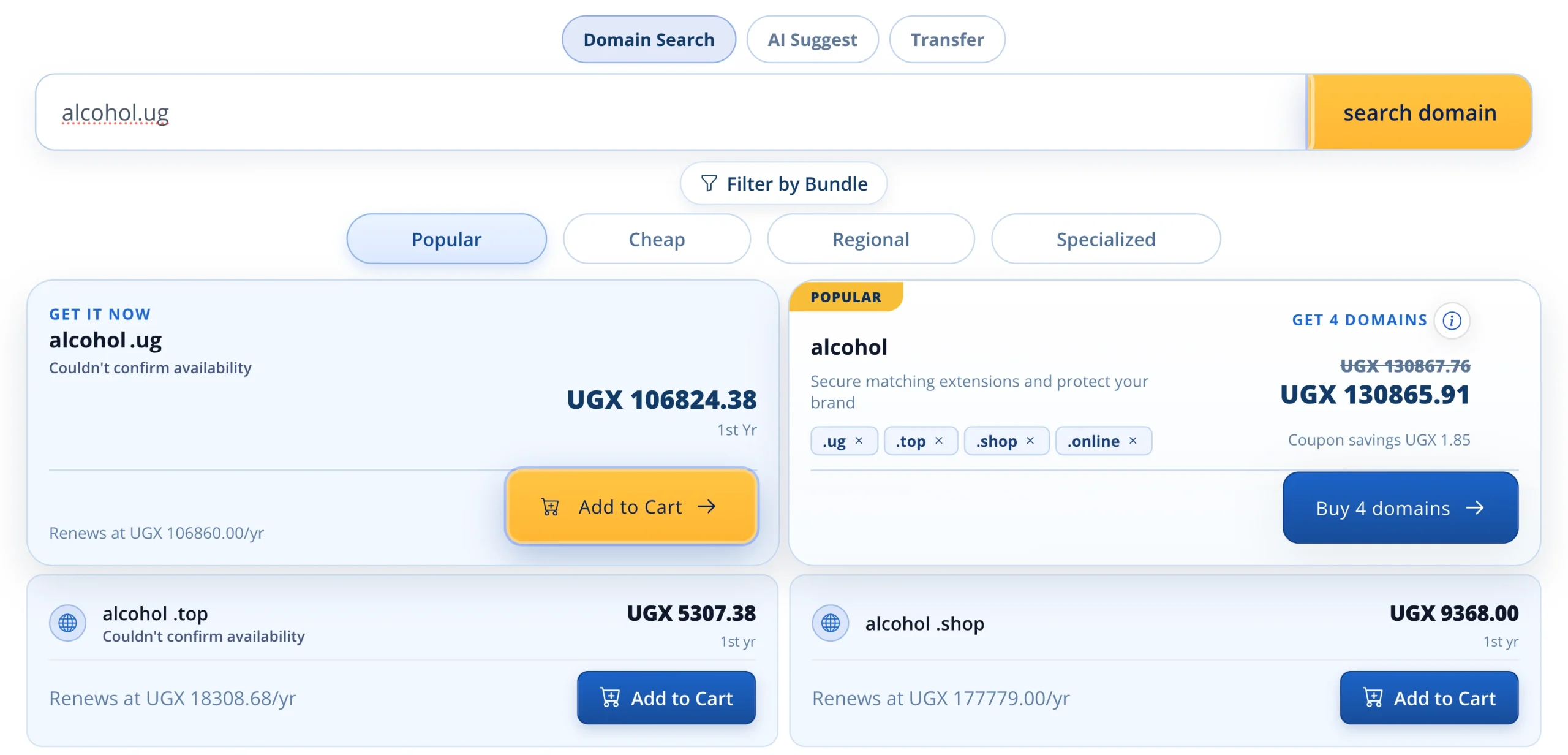
With us at Truehost, you can search for available domain names and register one for your business or personal website.
If your preferred name is already taken, consider these alternatives before committing to a lease:
- Try another extension: Check if the name is available under .com.ug, .com or another extension that suits your business.
- Add a descriptive word: Include a word related to your products, services, or location to create another suitable domain name.
- Contact the current owner: Ask if they’re willing to sell the domain outright. Compare their asking price with the total cost of leasing it before making a decision.
Register Your Domain with Truehost Before Considering a Lease
Domain leasing can help you secure an expensive domain without paying the full asking price upfront.
However, additional fees, ownership restrictions, and missed-payment penalties can make it costly in the long run.
If you’re starting a business or building an online presence in Uganda, check if your preferred domain is available for direct registration first. Buying an available name gives you ownership without long-term installments or restrictions imposed by a lease agreement.
At Truehost, we make it easy to search for and register a domain for your website. Find a suitable .co.ug, .com.ug or another available extension and secure your business name today.
