There are roughly 167 million .com domains out there. Compare that to about 12.5 million .net domains and 12 million .org domains, and you start to see the imbalance.
The .com extension is the undisputed heavyweight champion of the internet, but the other two aren’t going anywhere.
Most people associate .com with businesses, brands, and the general web. It’s the default. When someone hears a website name and can’t remember the ending, they guess .com first.
With the .org extension, people expect a nonprofit, a charity, a community group, or some kind of cause-driven organization.
And .net? Most visitors see it and think technology, networking, or infrastructure. It feels slightly more technical, even if the site itself has nothing to do with tech.
.com vs .net vs .org Compared
1) History
All three are original legacy generic top-level domains from the 1980s. They were created when the internet was still finding its footing, and they’ve been part of the address system ever since.
The .com and .net extensions have remained commercially managed throughout their existence.
The Public Interest Registry, a nonprofit organisation, now runs the .org extension, reinforcing the mission-driven identity .org has carried for decades.
That operational structure is part of why .org feels different to visitors. The registry itself is structured around public interest rather than profit.
2) Purpose
.com was for commercial entities. .net was for network and technology infrastructure. .org was for organizations, particularly those that didn’t fit neatly into the other categories: nonprofits, NGOs, clubs, associations.
Those original purposes have blurred significantly. .com is now the general default for any website: selling products, running a blog, or building a portfolio.
.net has become a general alternative when the .com version of a name is already gone.
And .org, despite being open to anyone, still strongly shows that a site is mission-driven, charitable, or community-focused.
3) Pricing
Here’s how Truehost’s pricing compares for these three extensions:
| Domain Extension | Registration | Renewal |
| .com | USh 29,450.00 | USh 45,144.00 |
| .org | USh 33,402.00 | USh 46,474.00 |
| .net | USh 32,414.00 | USh 56,088.00 |
The registration cost is what you pay upfront. The renewal cost is what you’ll pay every year after that to keep the domain.
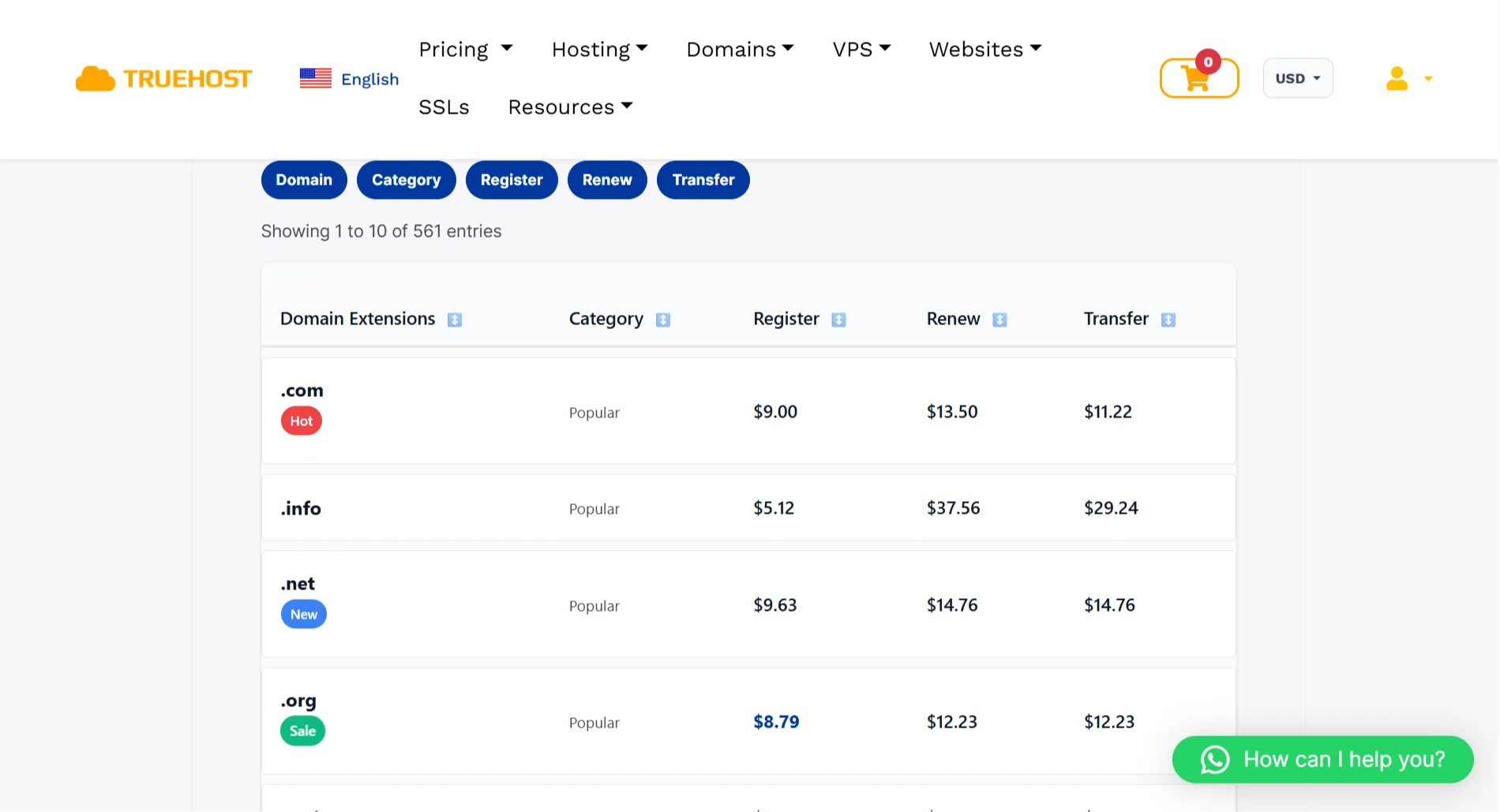
When registering a domain with any registrar, note that a cheap first year doesn’t mean much if the renewal jumps significantly.
4) Who Can Register
Any individual, any business, or any organization can register a .com, a .net, or a .org. There is no rule requiring nonprofit status for .org.
You don’t have to prove you’re a charity. You don’t have to be a tech company for .net. The barriers are purely about availability and price, not eligibility.
If you register a .org for a for-profit business, visitors might assume you’re a nonprofit until they read your About page.
If you register a .net for a bakery, people might wonder if you’re a tech company. So, the rules are open, but the expectations haven’t caught up.
5) Availability
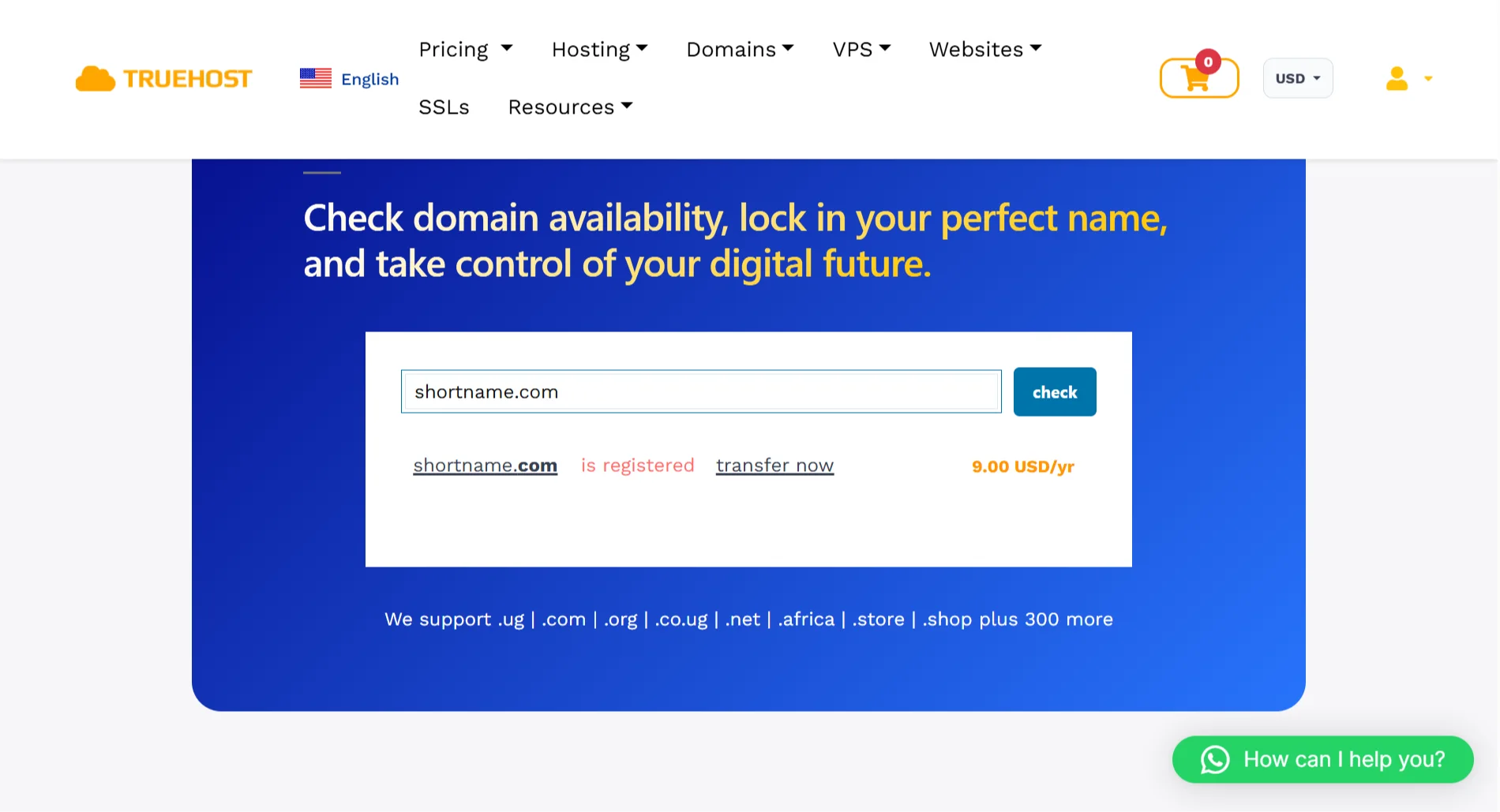
With 167 million registrations, the short, memorable, single-word names are essentially gone.
If you want a common word or a brief brandable name on .com, you’re either paying a premium or you’re out of luck.
The .net and .org extensions offer noticeably better availability for good names. You can still find clean, professional domain names on those extensions without adding hyphens, numbers, or awkward modifiers.
That availability is a real advantage when you’re trying to build a brand that people can remember and spell.
6) Perception by Audience
.com is the default. It carries the most trust and is the most memorable.
When someone hears a website name and has to guess the extension, they’ll try .com first.
.org signals credibility and cause-driven trust. It tells visitors that you’re probably working on something beyond profit.
.net leans technical. It’s still recognised and trusted, but it carries a faint association with networking and infrastructure. For tech-focused sites, that’s a natural fit.
For everyone else, it’s a perfectly functional choice that might raise a small question in a visitor’s mind
7) Performance
There is no direct SEO advantage to any of these extensions. Google states clearly that top-level domains do not affect search rankings.
The algorithm doesn’t care whether your site ends in .com, .net, or .org. What matters is the content, the user experience, and the page’s relevance.
The differences are indirect. Trust and click-through rates can favour .com and .org because of the associations we’ve already covered.
If more people click your link because they trust a .com, that can have a downstream effect on traffic and engagement.
Technically, all three are identical. There’s no speed difference, no uptime difference, no performance penalty for choosing one over another.
The servers that resolve .net domains are just as fast as the ones that resolve .com domains.
Which One Should You Register?
When to Register .com
- Maximum trust, credibility, and memorability: It’s the internet’s default. People trust it instantly and remember it easily.
- Business, brand, or general-purpose site: It’s the safest, most professional fit for selling, blogging, or building a brand.
- Tight budget: It has the cheapest upfront registration cost.
- The name is available: If you can get the .com, take it. It saves you from having to explain your web address later.
When to Register .org
- Non-profits, NGOs, charities, and community groups: It instantly signals that you are mission-driven rather than profit-driven.
- Mission-focused brand: It reinforces credibility if your business is built around a specific cause.
- Best long-term value: It often has the cheapest renewal rates, saving you money over the years.
- Better name availability: With far fewer registrations than .com, you have a much better chance of finding a clean, short name.
When to Register .net
- The .com is taken: It’s the best, most logical alternative to keep your brand name intact.
- You’re in tech or infrastructure: It naturally fits networking, IT, and software companies.
- You want a trusted fallback: It’s an original, widely recognized extension that won’t confuse your visitors.
Register Your Domain At Truehost
You’ve weighed the options, thought about your brand, and figured out which extension fits. Now it’s time to lock it in, and we’re here to make that easy.
At Truehost, we give you a fast, secure way to search for your name and register it instantly. We keep our pricing transparent, so you know exactly what you’re paying upfront.
Right now, our popular global extensions start at just USh 29,450.00 for a .com, USh 33,402.00 for a .org, and USh 32,414.00 for a .net.
We support hundreds of extensions, offer local-first choices for your region, and have a professional support team ready to help.
Just type your desired name into the search bar, pick your extension, and check out using Mobile Money, bank transfer, or card.
Head over to Truehost today to search for your domain and secure your brand online. No delays, no hidden fees.
